At this year’s RGS-IBG Annual International Conference, Lotte Luykx, a doctoral researcher at the Vrije Universiteit Brussel, was one of the two runner-ups for the PGR Prize for Best Postgraduate Presentation.
We are delighted to share a short blog post by Lotte, based on their award-winning presentation: How can we build consensus on the transformation of streets into sustainable and people-centred oases?

Streets are more than passageways for cars, they are the largest public spaces in our cities. Transforming streets into places for people is key to creating sustainable urban environments. But change rarely comes without friction as a new street layout or circulation plan affects people’s everyday mobility, behaviours, and habits.
In Brussels, for example, a plan to reduce traffic in several neighbourhoods was met with heavy protests. Citizens dismantled installations, interrupted council meetings, and eventually, the execution of the plan was put to a halt. Similarly, in Oxford, UK, the Central Oxfordshire Travel Plan faced opposition. These examples show that even well-intentioned plans that integrate participatory principles can become points of conflict.
While resources exist to aid design and implementation, a lack of evidence remains on how to support decision-making among diverse stakeholder groups. Furthermore, evaluating the effectiveness of participatory tools is challenging, since it involves navigating a variety of formats and complexities in stakeholder engagement.
This leads to a major challenge in the sustainable transition of cities: how can local communities make street transformations that work for everyone?
New approaches to participation: the Streetforum project
The StreetForum project, coordinated by Vrije Universiteit Brussel, addresses this question and investigates how to support local communities in building consensus among inhabitants, businesses, public services, local organisations, municipalities, and other groups. The project’s aim is not only to reach agreements but to create a meaningful process that welcomes diverging opinions and builds a common understanding.
Building on the expertise of the project partners, including universities, municipalities, NGOs, and businesses, the international StreetForum consortium has developed a toolkit of nine creative and bottom-up methods to engage people in new ways:
- Narrative-based tools: storytelling workshops, art interviews, and visual rich pictures
- Playful tools: co-design games, collaborative installations, and public living rooms
- Digital tools: a crowdsourcing platform and street-assessment tool, with hybrid applications that allow broader participation
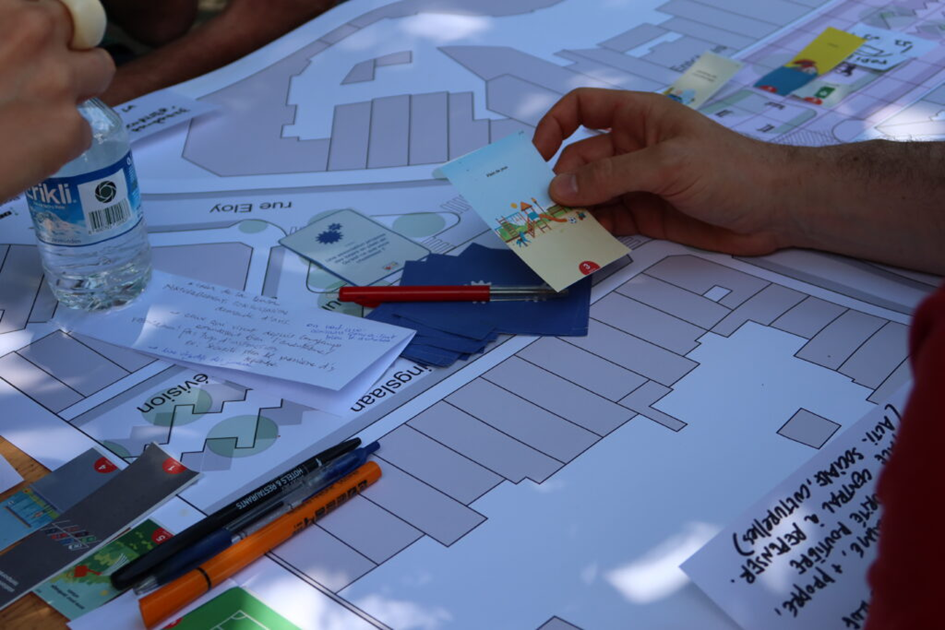
A novel evaluation framework for consensus-building
To assess the impact of the different tools on consensus-building, we developed a novel evaluation framework, building on a model by Innes and Booher (1999). This includes indicators like the creation of a common understanding, building trust, empowerment, awareness-raising, and process and outcome quality. A difficulty in assessing these innovative tools is their variety. Therefore, the tools were grouped into three categories: workshop-like tools, digital applications, and on-street activities.
Testing the Toolkit in Living Labs
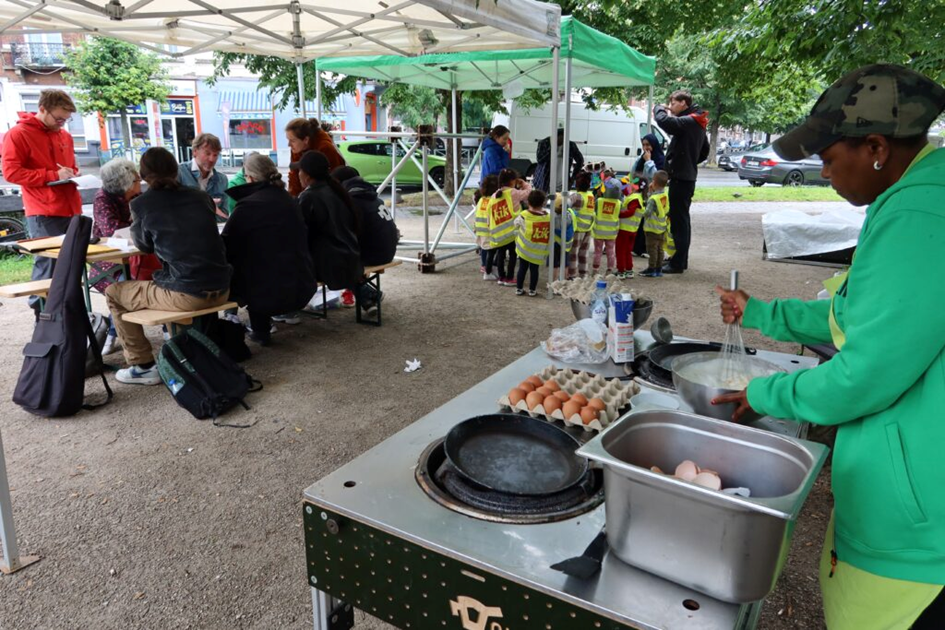
The project set up Living Labs in four cities (Brussels, Istanbul, Stockholm, and Vienna) through participatory trajectories in collaboration with citizens, NGOs, local authorities, and businesses. Each tool was demonstrated and tested in at least two out of the four locations. The evaluation resulted in 230 surveys from participants and 68 from facilitators and structured observations.
What makes a participatory tool impactful?
The findings revealed a nuanced picture. While none of the tools scored high on all indicators, combining formats can significantly improve outcomes. The evaluation showed that:
- Playful tools and gamification can be impactful, but need to be combined with active listening and agency over game rules
- On-street activities help build trust and encourage reflection on the use of a street, but need to be combined with facilitated discussion on the issues
- Digital tools can increase the number of participants, but need to be used in a hybrid format to ensure inclusivity
In the end, the living labs resulted mostly in non-conclusive outcomes. Agreements focused on how the street should be used, proposals for activities organised by citizens and local governments, and small or temporary interventions to improve the street.
Challenges for inclusivity
Inclusivity remains a challenge in many participatory processes. Innovative tools may help engage hard-to-reach groups. While our activities did not sufficiently reach certain stakeholders, like car users and elderly people, or children, a diversity of formats did increase diversity among participants. Key learnings are that:
- Building trust is fostered through recurring on-street activities and working with local organisations
- Visual elements can help bridge language barriers
- Accessible digital tools can reach stakeholders with time constraints like shop owners
Future research
The impact assessment showed that combining different formats and tools is essential for inclusive and impactful decision-making around street transformations. By lowering the threshold for participation, the toolkit brings a more diverse group of people around the table.
The evaluation did come with its limitations. Children and young people were not included in the evaluation, and our sample underrepresented car users and older people. Certain indicators, like trust or clarity of the goal, may depend on external factors such as the local political situation. Future research should further involve decision-makers in participatory research and explore how to scale up or embed the tools in policy.
In the next phase of my PhD, I will focus on how these emerging and creative participatory methods can be adapted to better include children in mobility issues. Children’s voices are often missing from urban and mobility planning, yet they are strongly affected by the design of streets and cities.
Lotte Luykx, Vrije Universiteit Brussel, Mobilise Research Group, part of the House of Sustainable Transitions.
StreetForum is a JPI Urban Europe project. The research and activities in Belgium are supported by Innoviris.