Call for TGRG session proposals: RGS-IBG Annual International Conference 2017

Dear TGRG members,

The call for sessions and papers for the 2017 RGS-IBG Annual International Conference is now open and we would like to invite TGRG members to submit session proposals for next year’s conference.

The conference will take place at the Royal Geographical Society in London from 29th August- 1st September and will be chaired by Professor Sarah Radcliffe (University of Cambridge). The conference theme is ‘Decolonising geographical knowledges: opening geography out to the world’.  We would particularly encourage sessions around this theme, but sessions relating to any aspect of transport geography will be considered.

If you would like to have your session sponsored by TGRG, please submit your session proposal to S.P.Blainey@soton.ac.uk AND K.J.Pangbourne@leeds.ac.uk by Friday 16th December. We will confirm session sponsorship as soon as possible and you will then have until Friday 17th February to send out your Call for Papers, choose your presenters and submit your full session proposal to RGS.

Please include the following in your session proposal (you do not have to use the AC2016 session proposal form at this stage):

  • A title
  • Names, affiliations and email addresses of the session convenors (we advise TWO)
  • A session abstract (about 200-300 words), and up to five keywords.

Guidance – sessions are scheduled into timeslots of 1 hour 40 minutes long. A session may not normally occupy more than two of these timeslots in the conference programme. TGRG has a ‘ration’ of timeslots, which we will bear in mind when selecting which proposals to sponsor. Please indicate how many high quality papers you think you will attract – four or five (max) ‘traditional’ papers will fit into a timeslot, or you can consider holding a debate, or a workshop, or adopt a different format such as a pecha kucha.

We welcome joint proposals with other groups (who may have a different timeline – please state what that is). For session proposals which attract many high quality submissions, we will consider allowing two timeslots – there are usually 2 or 3 sessions which have two timeslots each.

In addition to promotion of sessions and support in submitting session proposals, one of the benefits of a TGRG sponsored session is that we are given an allocation of guest passes for non-geographers and/or non UK conference participants. Session organisers may suggest names of established speakers for whom the TGRG can potentially offer a free conference pass, assuming the criteria for guest passes are met and subject to our allocation of guest passes. We also have a prize for the best paper by a postgraduate researcher presented in any TGRG sponsored session.

The following link may be useful in proposing your session:

http://www.rgs.org/WhatsOn/ConferencesAndSeminars/Annual+International+Conference/Annual+international+conference.htm

Best wishes,

Simon Blainey (TGRG Secretary)

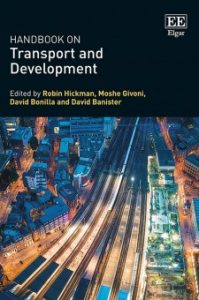
BOOK REVIEW: Handbook on Transport and Development edited by, R Hickman, M Givoni, D Bonilla and D Banister.

Richard Knowles‘ review of Handbook on Transport and Development, edited by Robin Hickman, Moshe Givoni, David Bonilla and David Banister is thorough and recognises the important contributions this book makes to the discipline.  His concluding paragraph states: ‘This handbook draws together deep insights into the multi faceted relationships between urban development and transport. It should be essential reading for anyone researching or teaching transport and development relationships’.  The complete review is available here.

This review is published with the kind permission of Elsevier. It is  also available via Science Direct, published in The Journal of Transport Geography, Vol 56, Richard Knowles, Handbook on Transport and Development. Hickman R., Givoni M., Bonilla D., Banister D. (Eds), 2015. Edward Elgar, Cheltenham, UK & Northampton MA, USA. ISBN 978 0 85793 724 5 hardback; xxv & pp. 698. £205. Elgaronline ISBN 978 0 85793 726 1

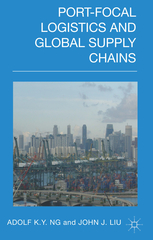
BOOK REVIEW: Port-Focal Logistics and Global Supply Chains, by Adolf K.Y. Ng and John J. Liu,

Jason Monios reviewed Port-Focal Logistics and Global Supply Chains, by Adolf K.Y. Ng and John J. Liu, which explores the role of the port in the supply Chain. Monios’ concluding paragraph states that ‘Ultimately, the book is a plea for more integrated and coordinated supply chains to benefit the network as a whole rather than destructive competition between individual firms’, this is followed by a range of pertinent questions.  Read the full review here.

This review is published with the kind permission of Elsevier. It is  also available via Science Direct, published in The Journal of Transport Geography, Vol 56 , Jason Monios, Port-Focal Logistics and Global Supply Chains, Adolf K.Y. Ng and John J. Liu, 2014, Basingstoke, UK: Palgrave MacMillan, £74 (hardback), ISBN: 9781137273680

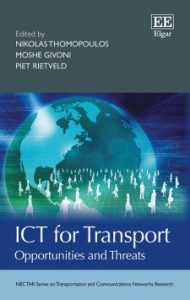
BOOK REVIEW: ICT for Transport: Opportunities and Threats, edited by Nikolas Thomopoulos, Moshe Givoni, and Piet Rietveld

Jacek Pawlak‘s review of ICT for Transport: Opportunities and Threats, edited by Nikolas Thomopoulos, Moshe Givoni, and Piet Rietveld highlights how effectively this book deals with the complexity of ICT for Transport, using a range of perspectives.  He also points out areas which deserved greater attention.

He commends the book for recognising the weaknesses and limitations of ICT as well as the strengths and potential.  Like Eiseman, he also stresses  a need to consider more fully   The full review is available here.

This review is published with the kind permission of Elsevier. It is  also available via Science Direct, published in The Journal of Transport Geography, Vol 55, Jacek Pawlak, ICT for Transport: Opportunities and Threats Edited by Nikolas Thomopoulos, Moshe Givoni, and Piet Rietveld, 2015. Cheltenham, UK: Edward Elgar Publishing Limited. £95.00 (hardback). ISBN 978 1 78347 128 7

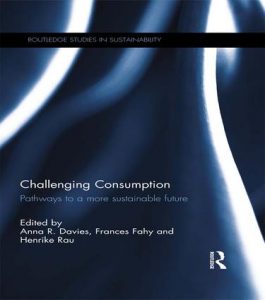
BOOK REVIEW: Challenging Consumption: Pathways to a more Sustainable Future, edited by A.R. Davies, F. Fahy, and H Rau

Danielle Eiseman‘s review of Challenging Consumption: Pathways to a more Sustainable Future, edited by Anna Davies, Frances Fahy, and Henrike Rau, focuses on the transport and mobility related chapters of the book.

Her review discusses how transport is identified as an ‘interconnected network of practices’ and questions the extent to which telework can be classified as a ‘Ecological Modernisation’.  The full review is available here.

This review is published with the kind permission of Elsevier. It is  also available via Science Direct, published in The Journal of Transport Geography, Vol 55, Danielle Eiseman, Challenging Consumption: Pathways to a more Sustainable Future. Davies A.R., Fahy F., Rau H. (Eds.), 2014. Routledge, Oxon, (£90.00 (Hardback); £29.99 (Paperback), ISBN: 978-0-415-82074-5)

CFP: TGRG Sponsored Session at RGS-IBG Postgraduate Forum Mid-Term Conference

Location: School of Geography and Planning, Cardiff University, 19th-21st April 2017

Abstract submission deadline: 20th January 2017

The organising committee of the annual RGS-IBG PGF Mid-Term Conference warmly invite submissions for the 2017 conference, to be held over an evening and two days at the School of Geography and Planning, Cardiff University. We invite postgraduate researchers from all areas of transport and mobilities geography, at any stage of their research, to submit an abstract to present a paper at the conference for a session sponsored by the RGS Transport Geography Research Group (TGRG).

The mid-term conference is a fantastic opportunity for all postgraduate students to present their current work and research to their peers in a friendly and supportive environment. Whether you’re a first time presenter, looking for friendly feedback on early results or a draft paper, or want an opportunity to practice and enhance your presenting skills, this event aims to foster a relaxed and informal space to discuss your research amongst your postgraduate peers.

The conference will take place in the Cathays Campus of Cardiff University in the heart of Cardiff close to the stunning Bute Park over the 20th and 21st April 2017. It will be preceded by an evening wine reception and keynote lecture on the 19th April.

The conference is designed to specifically cater to the professional development needs of the UK’s postgraduate community. There will be a range of workshops covering research methods; creative and critical thinking; publishing in academic journals; and generating both academic and non-academic impact; amongst others. Keynotes will be provided by established academics at Cardiff University such as Professor Mark-Jayne and beyond. Finally, a three-course conference dinner will take place on the evening of the 20th April at Barley and Rye in the lively city centre of Cardiff, and is included in the registration fee. Together these events will constitute a perfect opportunity for postgraduate researchers to develop both personal and professional working relationships with their peers from across the country.

Please send an abstract of no more than 250 words to rgsmidterm2017@cardiff.ac.uk using the subject heading “2017 RGS Postgraduate Mid-Term Conference TGRG’. Please include your full name and university along with four keywords, and your intention to present a paper by no later than Friday 20th January 2017.

The conference fee is £55. Information on how to register will be announced in the coming weeks. TGRG are kindly offering two bursaries available for transport or mobilities students whom are fully or partly self-funding conference attendance to cover the registration fee cost. If you would like to apply please use the subject heading “2017 RGS Postgraduate Mid-Term Bursaries TGRG” and email a short statement (no more than 300 words) on the relevance of the postgraduate conference to your research and the reasons why you require a bursary to attend, including your current funding status. Please include your abstract and send it to rgsmidterm2017@cardiff.ac.uk .

For updates follow us on Twitter @RGSmidterm2017 and @PGF_RGSIBG and if you have any questions or queries about the conference please get in touch with us at rgsmidterm2017@cardiff.ac.uk and we will be happy to help. Finally, please refer to our website at www.pgf.rgs.org/mid-term-conference-2017-main for further details and upcoming updates concerning all aspects of the conference. Please find details about the Transport Geography Research Group on their website: https://www.transportgeography.org.uk

We look forward to hearing from you.

Best wishes,

Lucy Baker, Melissa Dickinson, Charlotte Ford, Kieran O’Mahony, and Jen Owen

RGS-IBG Postgraduate Forum Mid-Term Conference 2017 Organising Committee at Cardiff University

‘On demand: Cultural economies of access and ownership’ (RGS-IBG Session write up)

This write up by Brendan Doody (University of Cambridge) and Lizzie Richardson (Durham University) is about the TGRG sponsored session ‘On demand: Cultural economies of access and ownership’ which took place at the RGS-IBG Annual Conference 2016.

The session ‘On demand: Cultural economies of access and ownership’ was organised by Brendan Doody (University of Cambridge) and Lizzie Richardson (Durham University). This theoretically and empirically diverse session was well attended and attracted an equally varied audience which included social, cultural, environmental, economic and transport geographers. This diversity is reflective of the way in which the ‘sharing’, ‘collaborative’, ‘gig’ or ‘access’ economy is challenging, renegotiating and reworking the ways in which resources are consumed and used across various sectors. In this ‘post-ownership’ story, citizen-consumers are increasingly paying to access goods and services ‘on-demand’, which may be ‘shared’ with other users.

The original call for papers encouraged participants to question and complicate the narrative of ‘post-ownership’ to describe trends associated with the sharing economy. More specifically, it encouraged participants to reflect on three related concerns:

  1. To what extent does access query normative understandings of, and practices associated with, ownership?
  2. What are the implications for access for the qualities and/or quantities of resource usage?
  3. How are emotional and ethical attachments realised through everyday negotiations of access and flexibilities of demand?

Each of the five speakers explored one or more of these concerns drawing on different empirical and conceptual resources.

Brendan Doody and Lizzie Richardson’s paper ‘The urban life of demand’ employed the notion of demand as a way of thinking about the changing nature and intensities of life in the city. Drawing on a range of examples they examined four aspects of experience associated with the city ‘on-demand’: 1) circulation; 2) logistics; 3) authenticity; and 4) familiarity. In the case of familiarity, they noted how as many of these platforms become part of the mundane urban landscape they are creating both senses of connection and disconnection in the city. For example, the growth of and universality of platforms such as Uber provide users with familiar senses and experiences of movement even in cities they have only just arrived in. Meanwhile platforms such as Airbnb and Vrumi where individuals hire rooms or people’s houses either for accommodation or workspaces are rendering once private havens somewhat unfamiliar as users co-occupy these spaces. Overall, the aim of the paper was to provide a preliminary sketch of the city ‘on-demand’ as a way of opening up more debate and discussion.

Robyn Dowling (University of Sydney) and Jennifer Kent’s (University of Sydney) paper explored ‘What does it mean to share a car?’ Drawing on interviews conducted in Sydney, Australia and their earlier work they used a social practice lens to examine meanings, materialities and skills involved in private car-sharing. Interestingly, they noted that a significant attraction of these services for some participants is that a number of parking spaces in central Sydney have been allocated exclusively for these vehicles. Thus using these schemes reflects an unwillingness to share public parking infrastructure. Moreover, these shared vehicles become users own personal spaces and reflecting this people do not want to know who has been in the car before them. Previous users often leave, however, various material traces (i.e., radio station, seat position, rubbish) and thus Dowling and Kent stressed the skills or ‘work’ involved in dealing with these issues. Their paper in this way questioned whether private car-sharing enterprises should be understood simply as forms of collaborative consumption as they also entail varying degrees of exclusivity.

Benedikt Schmid’s (University of Luxembourg) paper ‘Diverse economic organizations: Logics, access and ownership’ drew on ethnographic fieldwork conducted at Hobbyhimmel, an open workshop based in Stuttgart, Germany. For a small fee this non-profit organisation offers participants interested in crafts, art, repair, recycling and upcycling the opportunity to access different work spaces which are set-up with a range of equipment, appliance and tools and other forms of support (e.g., instructions, courses and encouragement). Drawing on theories of practice and institutional logics, Schmid explored the diverse materials, meanings, skills and logics underpinning these alternative economic practices highlighting the ways in which they both challenge and reproduce more traditional economic practices.

Gareth Powells  (Newcastle University) paper interrogated: ‘The shared grid: Materially connected demands and the new deals for energy’. He drew particular attention to the challenge that managing the late afternoon/evening peak (1600-2000) in electricity use presents for energy suppliers in the UK. In the past this peak has been managed on the supply side by reinforcing electricity network. More recently there has been growing political and commercial interest in managing demand as the increased range and diversity of sources of electricity generation will make it less predictable and controllable. Drawing on preliminary research in Newcastle Upon Tyne, UK, Powells explored customers’ views on shifting from unit to service-based agreements with their energy company. Under this model, customers would potentially pay for services such as comfort (i.e., a home heated to 18-22 degrees) rather than the amount of energy they use and could be rewarded for flexibility when there is load limited supply. The paper is illustrative accordingly of how the UK energy sector is gradually moving away from its traditional logic of efficiency to one of sufficiency.

Lizzie Richardson’s (Durham University) paper ‘Consuming the workplace: Demand and work representation’ considered some of the connections between demand and work that are opened up by practices of ‘mobile working’ afforded by digital technologies. Drawing on ongoing research funded by the RGS-IBG and now the Leverhulme Trust, the paper outlined the apparently contradictory trend in which the form of work – its organisational structure- tends towards increased labour market flexibility/insecurity (e.g., ‘gig economy’ jobs), whilst the substance of work – individual working activity – can tend towards a greater depth and breadth of skills (e.g., the individual flexibility seen in co-working offices).

The session as a whole demonstrated the ways in which geographers can help to question and interrogate extent to which access-based models help to challenge normative understandings of, and practices associated with, ownership, the qualities and/or quantities of resource usage and the emotional and ethical attachments realised through everyday negotiations of access and flexibilities of demand.

BOOK REVIEW: High Mobility in Europe: Work and Personal Life, edited by Gil Viry and Vincent Kaufmann

Debbie Hopkins‘ review of High Mobility in Europe: Work and Personal Life,  by Gil Viry and Vincent Kaufmann (Eds.)  critiques to question posed by the book and discusses the key contributions to knowledge and understanding.

She highlights that the book ‘provides critical insights into changing mobility practice and the intersection of work and personal lives’, despite being a little data heavy.   Read her full review here to understand more about the editors’ contributions to transport geography and other disciplines.

This review is published with the kind permission of Elsevier. It is  also available via Science Direct, published in The Journal of Transport Geography, Vol 55, Debbie Hopkins, High Mobility in Europe: Work and Personal Life. Gil Viry and Vincent Kaufmann (Eds.). 2015. Basingstoke, UK, and New York, US: Palgrave Macmillan. (£65.00 (hardback). ISBN 978-1-137-44737-1