MOBILE PHONES, MOBILITY AND TRANSPORT IN SUB-SAHARAN AFRICA

Two panel sessions exploring the growing linkages between travel/transport organisation and mobile phones in Africa were held at the African Studies Association biennial conference at Sussex University in September 2014, organised and chaired by Gina Porter from Durham University and sponsored by the DFID-funded Africa Community Access Programme.

The remarkable expansion of mobile phone networks in Africa is bringing a tangible new dimension of connectivity into transport and access equations on the ground: now-feasible interactions between virtual and physical mobility are helping to reshape access potential, even in many hitherto remote areas (especially where linked to the rapid uptake of transportation modes such as the motorcycle-taxi). Phones can cut travel costs and time, reducing the number of long, potentially hazardous road journeys on poor roads in badly maintained vehicles, in regions with among the world’s highest accident rates and where highway robbery and other types of harassment associated with travel may be widespread. Better distance management through phone use may be particularly closely associated with populations with very low disposable incomes, and/or whose physical mobility is limited, for instance by disability, infirmity, age or gender. A write-up of these sessions, by Gina, who will give the keynote Hoyle Lecture speech at next year’s RGS-IBG conference, follow.

Continue reading MOBILE PHONES, MOBILITY AND TRANSPORT IN SUB-SAHARAN AFRICA →

Conceptualising low carbon mobility

This is a write-up of the RGS-IBG 2014 Session:
Transport and Energy (2):
Conceptualising low carbon mobility,
Sponsored by the Transport Geography Research Group and the
Energy Geography Working Group on Thursday 28th August 2014, by Neol Cass.

Session organisers: Dr Noel Cass and Professor James Faulconbridge,
Lancaster University

The session was organised in conjunction with Robin Lovelace of
Leeds University and TGRG, and Stuart Barr of Exeter and EGWG,
whose session on ‘Transport and Energy: evidence base for post-carbon futures’ preceded it. There were 5 papers presented in each session and the audience numbers were consistently high. The first session focussed more on empirical and quantitative research (with the exception of Antonio Ferreira’s discourse analysis). Papers in the second session were more focused on social science approaches.

Continue reading Conceptualising low carbon mobility →

BOOK REVIEW: Figures Infrastructures: An Atlas of Roads and Railways by Bieke Cattoor, Bruno De Meulder

Simon Blainey provides an engaging and informative review of Figures Infrastructures: An Atlas of Roads and Railways, by Bieke Cattoor and Bruno De Meulder.

A short summary including a link to a copy of the review follows.

Continue reading BOOK REVIEW: Figures Infrastructures: An Atlas of Roads and Railways by Bieke Cattoor, Bruno De Meulder →

BOOK REVIEW: Sustainable Transport Studies in Asia. Akimasa Fujiwara, Jungyi Zhang (Eds.),

Naznin Afrose Huq‘s review of Sustainable Transport Studies in Asia, edited by Akimasa Fujiwara and Jungyi Zhang offers an insightful overview of the themes considered in the book, emphasising the application of a range of models designed to understand the development of sustainable urban transport systems.


A short summary including a link to a copy of the review follows.

Continue reading BOOK REVIEW: Sustainable Transport Studies in Asia. Akimasa Fujiwara, Jungyi Zhang (Eds.), →

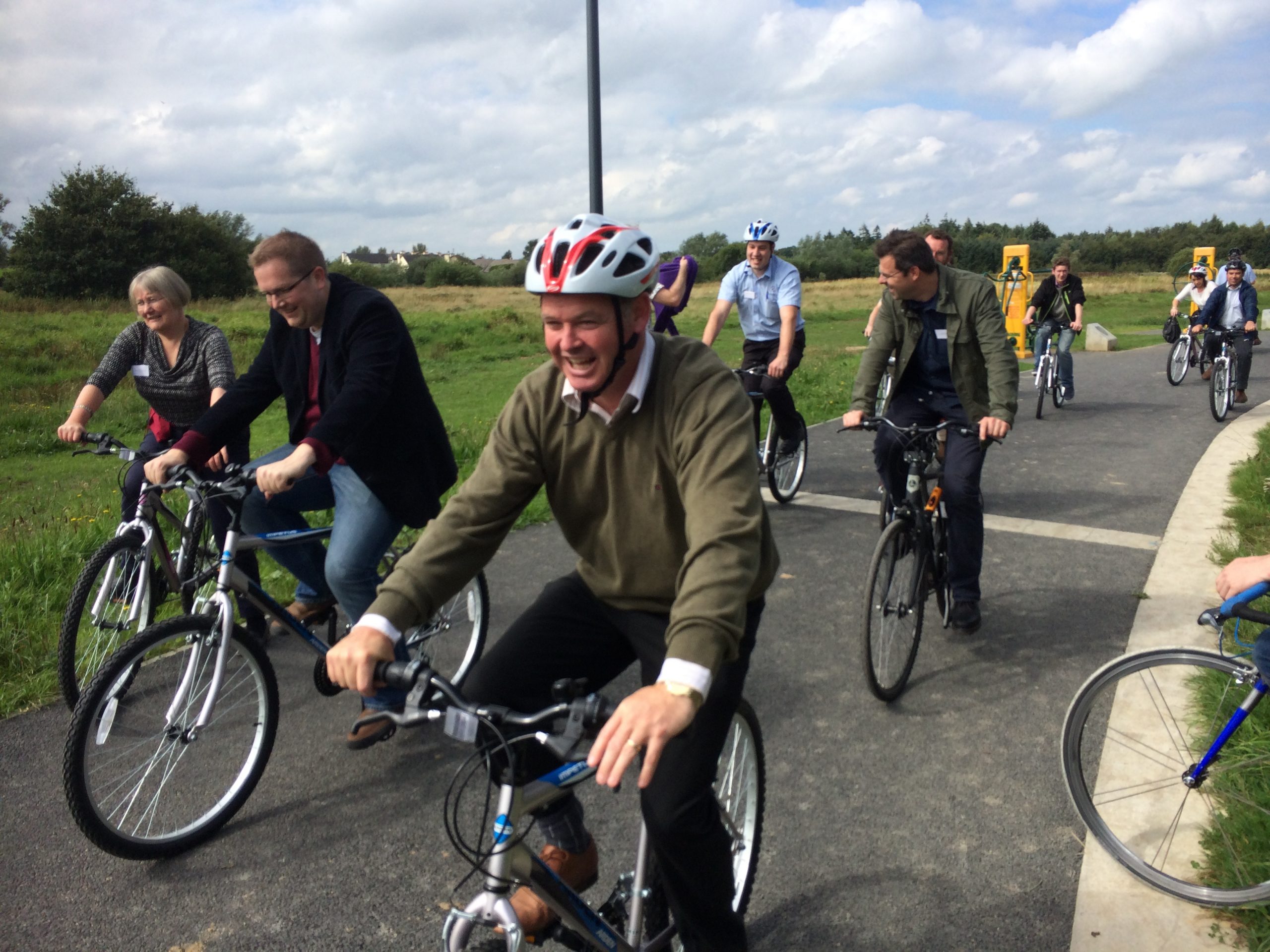
Irish Transport Research Network Cycling Workshop, Limerick

The Irish Transport Research Network preceded their 2014 annual conference, at the University of Limerick, with a cycling-focused workshop celebrating Limerick’s position as a demonstration city for smarter travel.

The workshop took place on the 3rd September and effectively brought together practitioners, policy makers and researchers from across Ireland for both the workshop and the conference.

Continue reading Irish Transport Research Network Cycling Workshop, Limerick →

Transport and energy: evidence base for post-carbon futures

The TGRG and Energy Geographies Working Group joined forces for the second year running at the RGS-IBG annual conference, to host another session on Energy and Transport. This is a growing area of academic study, as illustrated by the increased number of presentations (10 this year compared with 6 the previous year) and attendees who packed the room.

This post provides a very brief overview of each presentation and, where possible, links to slides from the presenters.

Continue reading Transport and energy: evidence base for post-carbon futures →

Overview of the Irish Transport Research Network Annual Conference

Having been established in 2009, the Irish Transport Research Network (ITRN) aims to provide a setting to foster the development of transport studies in Ireland whilst promoting the connection between researchers working in this field. Formed by a cohort of Irish Universities, ITRN is positioning itself to act as an interface in which academic research can be accessible to external bodies and to inform policy development in an effort to move towards a sustainable transport system.

Recently, ITRN held the 5th iteration of their annual conference at the University of Limerick. Split across fifteen sessions, a total of thirty-five research presentations were delivered by individuals based at fourteen different research institutions originating both within and outside of Ireland.

Continue reading Overview of the Irish Transport Research Network Annual Conference →

New members on TGRG committee

Following the very strong turn-out of Transport Geographers at the RGS-IBG annual conference last week in London, we will be uploading many posts in the coming weeks. The record number of sessions hosted by the Transport Geography Research Group (TGRG) were extremely well attended and contained very high quality presentations. Summaries of the sessions, including slides, will be available from the Write-ups section of the website. Perhaps most importantly, we can welcome some new members to our updated Committee. See below for a write-up.

Continue reading New members on TGRG committee →