All posts by Claude Lynch

TGRG sponsored sessions at RGS-IBG Annual Conference 2026

The TGRG is running an exciting series of sponsored sessions throughout the RGS-IBG Annual International Conference – held this year in London from 2 September – 4 September. We welcome attendance from any and all registered attendees with an interest in transport geography.

See the full list of sessions below, with links to ExOrdo where you may review the convenors and presenters. Sessions with multiple parts have been grouped.

Wednesday 2 September

The mobility of children and youth in times of socio-ecological transformation: From school streets to cities for children (2) — 11.10 – 12.50, Royal School of Mines Building Room 301E, Imperial

Meet the Editors of the Journal of Transport Geography — 13.10 – 14.10, Drayson Room, RGS-IBG

HYBRID – Disability and Cycling: critical reflections, lived experiences, policy and practice — 14.25 – 16.05, Education Centre, RGS-IBG

Active Mobility to School: Geographies of Inequality, Justice, and Everyday Urban Movement (1) — 14.25 – 16.05, Physics/Blackett Building Room 1004, Imperial

Active Mobility to School: Geographies of Inequality, Justice, and Everyday Urban Movement (2) — 16.35 – 18.15, Physics/Blackett Building Room 1004, Imperial

‘Transport Governance for a Future’ with Professor Kate Pangbourne (Panel) — 16.35 – 18.15, Electrical Engineering Building Lecture Theatre 408, Imperial

Thursday 3 September

Current and emerging research in transport (1): Inequalities — 9:00 – 10:40, SALC / Sherfield Building Room 6, Imperial

Current and emerging research in transport (2): Innovations — 11:10 – 12:50, SALC / Sherfield Building Room 6, Imperial

Centering intersectional feminist approaches in mobility planning (1) — 9:00 – 10:40, Electrical Engineering Building Room 406, Imperial

HYBRID – Centering intersectional feminist approaches in mobility planning (2) — 11:10 – 12:50, Director’s office, RGS-IBG

Reclaiming street space from cars (1): new instruments and experiences with the socio-ecological transformation of urban neighbourhoods and cities for better liveability and more sustainable transport — 9:00 – 10:40, Royal School of Mines Building Room 301D, Imperial

Reclaiming street space from cars (2): new instruments and experiences with the socio-ecological transformation of urban neighbourhoods and cities for better liveability and more sustainable transport — 11:10 – 12:50, Royal School of Mines Building Room 301D, Imperial

Reclaiming street space from cars (3): new instruments and experiences with the socio-ecological transformation of urban neighbourhoods and cities for better liveability and more sustainable transport — 14.25 – 16.05, Royal School of Mines Building Room 301D, Imperial

Transport and Mobility Justice: Current Trajectories and Future Directions — 11:10 – 12:50, Skempton Building Room 301, Imperial

The Brian Hoyle Lecture in Transport Geography: Transport geography of inequality in the Global South — 16.35 – 18:15, Electrical Engineering Building Lecture Theatre 408, Imperial

The Brian Hoyle Lecture in Transport Geography Reception — 18.45 – 20.00, Lowther Room, RGS-IBG

Friday 4 September

ONLINE – Producing Marginality in Motion: Questions of ‘Social Justice’ in the Public Transport System of the Global South — 11:10 – 12:50, Online Only, Zoom Room 2

Reimagining rural mobility: Everyday experiences, practices and opportunities in low-density regions (1) — 14.25 – 16.05, Physics/Blackett Building Lecture Theatre 2, Imperial

Reimagining rural mobility: Everyday experiences, practices and opportunities in low-density regions (2) — 16.35 – 18.15, Physics/Blackett Building Lecture Theatre 2, Imperial

With such a wide range of transport-themed sessions available, we are excited to welcome you to London in September and look forward to seeing as many new and returning faces as possible.

Runner-up PGR Prize at RGS-IBG 2025: Lotte Luykx

At this year’s RGS-IBG Annual International Conference, Lotte Luykx, a doctoral researcher at the Vrije Universiteit Brussel, was one of the two runner-ups for the PGR Prize for Best Postgraduate Presentation.

We are delighted to share a short blog post by Lotte, based on their award-winning presentation: How can we build consensus on the transformation of streets into sustainable and people-centred oases?

Streets are more than passageways for cars, they are the largest public spaces in our cities. Transforming streets into places for people is key to creating sustainable urban environments. But change rarely comes without friction as a new street layout or circulation plan affects people’s everyday mobility, behaviours, and habits.

In Brussels, for example, a plan to reduce traffic in several neighbourhoods was met with heavy protests. Citizens dismantled installations, interrupted council meetings, and eventually, the execution of the plan was put to a halt. Similarly, in Oxford, UK, the Central Oxfordshire Travel Plan faced opposition. These examples show that even well-intentioned plans that integrate participatory principles can become points of conflict.

While resources exist to aid design and implementation, a lack of evidence remains on how to support decision-making among diverse stakeholder groups. Furthermore, evaluating the effectiveness of participatory tools is challenging, since it involves navigating a variety of formats and complexities in stakeholder engagement.

This leads to a major challenge in the sustainable transition of cities: how can local communities make street transformations that work for everyone?

New approaches to participation: the Streetforum project

The StreetForum project, coordinated by Vrije Universiteit Brussel, addresses this question and investigates how to support local communities in building consensus among inhabitants, businesses, public services, local organisations, municipalities, and other groups. The project’s aim is not only to reach agreements but to create a meaningful process that welcomes diverging opinions and builds a common understanding.

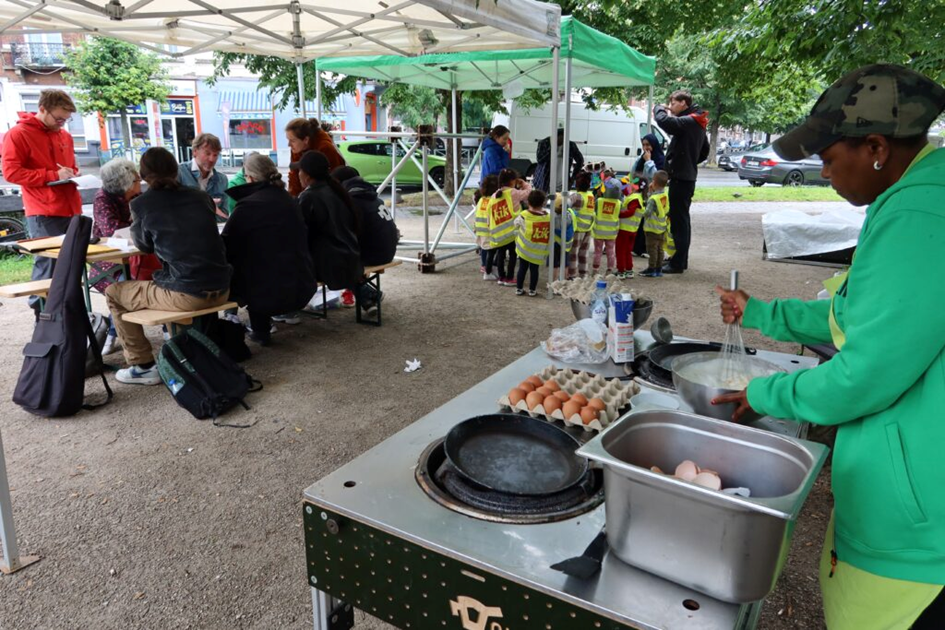
Building on the expertise of the project partners, including universities, municipalities, NGOs, and businesses, the international StreetForum consortium has developed a toolkit of nine creative and bottom-up methods to engage people in new ways:

  • Narrative-based tools: storytelling workshops, art interviews, and visual rich pictures
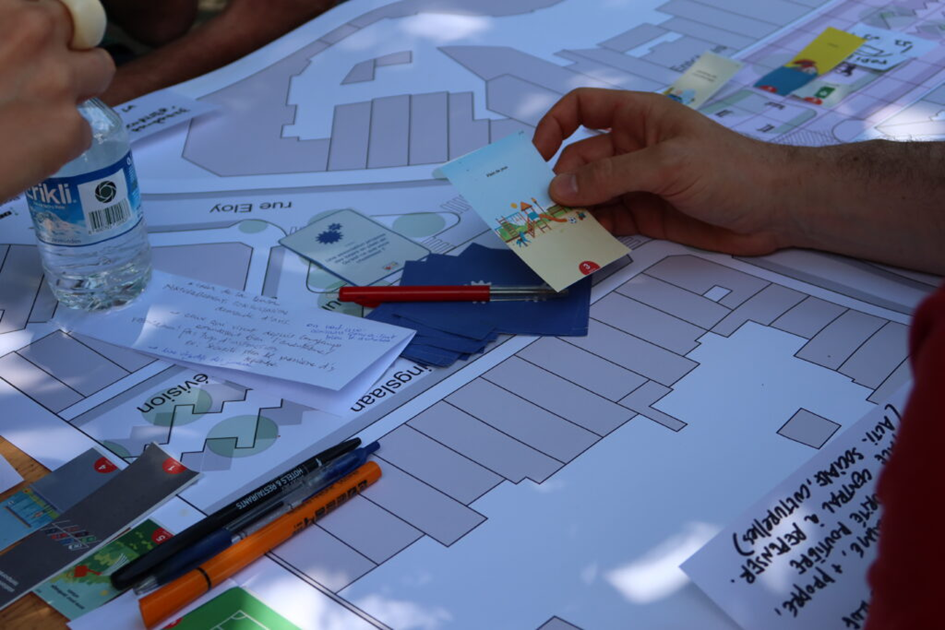
  • Playful tools: co-design games, collaborative installations, and public living rooms
  • Digital tools: a crowdsourcing platform and street-assessment tool, with hybrid applications that allow broader participation

A novel evaluation framework for consensus-building

To assess the impact of the different tools on consensus-building, we developed a novel evaluation framework, building on a model by Innes and Booher (1999). This includes indicators like the creation of a common understanding, building trust, empowerment, awareness-raising, and process and outcome quality. A difficulty in assessing these innovative tools is their variety. Therefore, the tools were grouped into three categories: workshop-like tools, digital applications, and on-street activities.

Testing the Toolkit in Living Labs

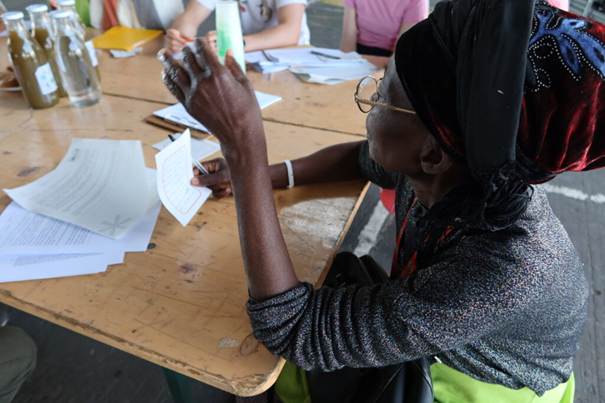
The project set up Living Labs in four cities (Brussels, Istanbul, Stockholm, and Vienna) through participatory trajectories in collaboration with citizens, NGOs, local authorities, and businesses. Each tool was demonstrated and tested in at least two out of the four locations. The evaluation resulted in 230 surveys from participants and 68 from facilitators and structured observations.

What makes a participatory tool impactful?

The findings revealed a nuanced picture. While none of the tools scored high on all indicators, combining formats can significantly improve outcomes. The evaluation showed that:

  • Playful tools and gamification can be impactful, but need to be combined with active listening and agency over game rules
  • On-street activities help build trust and encourage reflection on the use of a street, but need to be combined with facilitated discussion on the issues
  • Digital tools can increase the number of participants, but need to be used in a hybrid format to ensure inclusivity

In the end, the living labs resulted mostly in non-conclusive outcomes. Agreements focused on how the street should be used, proposals for activities organised by citizens and local governments, and small or temporary interventions to improve the street.

Challenges for inclusivity

Inclusivity remains a challenge in many participatory processes. Innovative tools may help engage hard-to-reach groups. While our activities did not sufficiently reach certain stakeholders, like car users and elderly people, or children, a diversity of formats did increase diversity among participants. Key learnings are that:

  • Building trust is fostered through recurring on-street activities and working with local organisations
  • Visual elements can help bridge language barriers
  • Accessible digital tools can reach stakeholders with time constraints like shop owners

Future research

The impact assessment showed that combining different formats and tools is essential for inclusive and impactful decision-making around street transformations. By lowering the threshold for participation, the toolkit brings a more diverse group of people around the table.

The evaluation did come with its limitations. Children and young people were not included in the evaluation, and our sample underrepresented car users and older people. Certain indicators, like trust or clarity of the goal, may depend on external factors such as the local political situation. Future research should further involve decision-makers in participatory research and explore how to scale up or embed the tools in policy.

In the next phase of my PhD, I will focus on how these emerging and creative participatory methods can be adapted to better include children in mobility issues. Children’s voices are often missing from urban and mobility planning, yet they are strongly affected by the design of streets and cities.

Lotte Luykx, Vrije Universiteit Brussel, Mobilise Research Group, part of the House of Sustainable Transitions.

StreetForum is a JPI Urban Europe project. The research and activities in Belgium are supported by Innoviris.

AGM 2025

We will be holding our AGM on Thursday 4 September 2025 from 10-12AM BST online via Zoom. To attend, please contact Mengqiu Cao at mengqiu.cao@ucl.ac.uk  

We will be seeking to appoint the following positions at the meeting:

  • Committee chair;
  • Secretary;
  • Web and social media officer;
  • Early career representative;
  • Postgraduate representatives (x2)

The meeting will also include a one hour panel discussion as follows:

Transport Geographies of Transport Geographers: Academic Travel and Climate Change.

Panellists:
– Winnie Mittulah, University of Nairobi
– Debbie Hopkins, University of Oxford
– Lin Weiqiang, National University of Singapore
– Gaurav Mittal, University of Oxford

Academic travel significantly contributes to global carbon emissions, revealing deep contradictions within the broader social sciences. While transport geographers critically examine mobility, sustainability, and climate change, their own travel practices—especially long-haul flights for conferences, fieldwork, and collaborations—reflect entrenched norms of hypermobility. This panel will reflect on the paradox of transport geographers contributing disproportionately to transport-related emissions. It will critically engage with the geographies of academic mobility, situating them within broader debates on climate change, institutional structures, and disciplinary expectations. Drawing on perspectives from decarbonising travel, just mobilities, and decolonising geographies, panellists will explore the inequalities embedded in academic travel, including disparities between scholars from the Global North and South, early-career and senior researchers, and those in permanent versus precarious positions. They will also examine how institutional policies, funding structures, and the push for internationalisation influence academic mobility patterns.

The full agenda for our meeting and the minutes from 2024 are appended below in .pdf format.

TGRG sponsored sessions at RGS-IBG Annual Conference 2025

The TGRG is running an exciting series of sponsored sessions throughout the RGS-IBG Annual International Conference – held this year in Birmingham, from 27 August – 29 August. We welcome attendance from any and all registered attendees with an interest in transport geography. See the full list of sessions below.

27 August

09:00 – 10:40 Arts Building: LR6 (Hybrid)

Critical Geopolitics and Transport Geographies (1)

Organised by: Gaurav Mittal (Convenor), Jasnea Sarma (Convenor), Tim Schwanen (Convenor), James D Sidaway (Convenor), and Weiqiang Lin (Discussant)

  1. Geographies of Interconnection Hubs and their geopolitical embeddings. » Finn Dammann, Boris Michel
  2. Geographies of electric automobility: from EU battery supply chain legislation to manganese mining in Zambia. » Devyn Remme
  3. Geographies of Descent: Rethinking Transports and Geopolitics Across the Himalayan Border Corridor. » Baichuan Liu
  4. Hostage Roads: Mapping the Volatile Geographies of Chinese and Indian Cross-Border Transport Projects in Myanmar’s Post-Coup Conflict-Scape. » Angshuman Choudhury

09:00 – 10:40 Muirhead Building: Room 122 (in-person only)

Current and Emerging Research in Transport

Organised by: Patrick Miner (Convenor), Claude Lynch (Convenor), and Lluis Martinez (Convenor)

  1. Exploring case studies of transportation as urban care infrastructure in North American cities: A narrative review approach. » Eyram Agbe
  2. Agent-Based Modelling of Travel Behaviour in Response to Traffic Disruptions. » Yihang Bai
  3. Exploring the impacts of transport megaprojects on local communities: A case study of the Orange Line Metro Train (OLMT) in Lahore, Pakistan » Mominyar Khalid Butt
  4. “This wall of green felt like a safety blanket”: Exploring the influence of nature on the health and wellbeing outcomes of cycling. » Mel Cairns
  5. The challenges of Low-Traffic Neighbourhoods in lower-income areas of European capitals – case-studies of Cureghem (Brussels) and Tower Hamlets (London). » Valentin Carraud
  6. Equity implications of car dependence in the UK. » Maria Wood, Adam Dennett, Esra Suel, Gerry Casey

11:10 – 12:50 Arts Building: LR6 (Hybrid)

Critical Geopolitics and Transport Geographies (2)

Organised by: Gaurav Mittal (Convenor), Jasnea Sarma (Convenor), Tim Schwanen (Convenor), James D Sidaway (Convenor), and Weiqiang Lin (Discussant)

  1. A short-cut to the sea: Funan Techo Canal and the (geo)politics of anticipation in Cambodia. » Mira Käkönen, Jean-Philippe Venot, Oudom Ham
  2. Road infrastructure and commodification of customary land in Manipur, India. » Anurag Das
  3. Transport as Geopolitical Infrastructure: Statecraft and Power Dynamics at the Poland-Belarus Border. » Wojciech Keblowski
  4. Geopolitics and local development: the multi-scalar politics of Chinese investment in Duisburg’s Container Terminal and London’s Royal Albert Dock. » Giles Mohan, Florian Schaefer

11:10 – 12:50 In-person only – standard 12 (details TBC)

Accessibility and Social Housing: Spatial analyses, Policy and Residents’ Perspectives

Organised by: Eva Van Eenoo (Convenor) and Adam Radzimski (Convenor)

  1. Understanding the accessibility of social housing through spatial analysis: approaches, limitations, perspectives. » Adam Radzimski
  2. The Accessibility of Social Housing Units: An Analysis of Location and Policy in Flanders, Belgium. » Eva Van Eenoo, Lisa Cochez, Nele Aernouts, Kobe Boussauw
  3. Replacing car space with public or social housing? » Patrick Miner

14:40 – 16:20 Arts Building: LR8 (In-person only)

Creative Approaches to Transport Research (1)

Organised by: Claude Lynch (Convenor), Lluis Martinez (Convenor), and Patrick Miner (Convenor)

  1. Experimental co-creation as a tool for citizen participation in living labs? » Ida Grundel
  2. Governmental perspectives on urban mobility policies. » Julia Hansel
  3. Queer mobilities, sexual borders, (erotic) infrastructures and the making of the (inter)national: slow railways and fast motorways. » Tilen Kolar
  4. Uncovering discursive mechanisms towards mobility in/justice: how social movement organizations narrate mobility violence, safety, and justice in the Netherlands. » Eva Kwakman
  5. Stop the autopsy. » Sandra La Rota
  6. Car-sharing masculinities: negotiations of power and space around the shared car. » Yi Fan Liu

16:50 – 18:30 Arts Building: LR8 (In-person only)

Creative Approaches to Transport Research (2)

Organised by: Lluis Martinez (Convenor), Patrick Miner (Convenor), and Claude Lynch (Convenor)

  1. Evaluating the impact of new participatory tools for urban planning: the StreetForum Project. » Lotte Luykx, Imre Keserü
  2. Running late and then left behind: a mobilities framework for embodied delay. » Sorcha MacIntyre
  3. From Lived Experience to Policy Action: PhotoVoice™ in Community-Led Transport Policy. » Megan Pickles, Kate Pangbourne
  4. Understanding Transport Equity Beyond Coverage: User Experience and Public Perception of Wuhan’s Metro Expansion. » Yuqi Zhao, Karen Lucas, Sarah Lindley
  5. Participatory mapping to understand public perceptions on zero emission vehicle policy. » Vanessa Ternes, Greg Marsden, Simon Shepherd
  6. Envisioning the Future of Mobility: Exploring Children’s Conceptions of Future Mobility Using Participatory Arts-Based Methods. » Jesse Wise

28 August

09:00 – 10:40 Teaching and Learning Building: Room 118 (In-person only)

Rethinking Transit-Oriented Development (1): Integration, Equity, Strategic Planning and Investment

Organised by: Chia-Lin Chen (Convenor, Panel Chair) and Richard Knowles (Convenor)

  1. Rethinking Transit-Oriented Development (TOD) for Ageing Populations: An Affordance-Based Analysis of Alternative Last-Mile Mobility. » Chengyuan An
  2. Facilitating Transit-Oriented Development with investment in Tram-Trains. » Richard Knowles, Fiona Ferbrache
  3. Reshaping Socio-Economic Geography through Mass Rapid Transit: Longitudinal Evidence from Taipei. » Chia-Lin Chen, Zi Ye, Taku Fujiyama, Jen-Jia Lin
  4. Transit-Oriented Development in Suburban Areas: Implementation Challenges and Governance Approaches in Germany. » Nadezda Krasilnikova
  5. A Governance No Man’s Land? Implementing Bike-Train Intermodality in Berlin-Brandenburg and the Randstad. » Krzysztof Janko

11:10 – 12:50 Muirhead Building: Lecture Theatre G15 (Hybrid)

Rethinking Transit-Oriented Development (2): Integration, Equity, Strategic Planning and Investment

Organised by: Chia-Lin Chen (Convenor, Panel Chair) and Richard Knowles (Convenor)

  1. Integrating transport and land-use planning for transit oriented development: ideal and reality. » Yan Li
  2. Transit accessibility and proximity-oriented neighbourhood planning: A perception of closeness. » Mohammad Hamed Abdi
  3. A Tale of Two Washingtons – an “old” new town and a “new” old town: The special relationship between integrating land use and transport planning in the U.K. and U.S.A. » Michael Crilly
  4. Transit-Oriented Development through High-Speed Rail: Rethinking Spatial Integration and Regional Equity. » Yudi Liu, Kojiro Sho
  5. Contested Territories: Resisting transit-oriented suburbanization. » Flore Guichot, André Klaassen, Harriet Dunn

14:40 – 16:20 Muirhead Building: Room 118 (In-person only)

E-Cargo Cycles: A Creative Future for Last Mile Delivery?

Organised by: Billy Clayton (Convenor) and Daniela Paddeu (Convenor)

  1. The Last-Mile Shake-Up: Vibration Performance of E-Cargo Bikes vs. Vans. » Katherine Theobald, Tom Cherrett, Tim Waters
  2. E-cargo cycles: Understanding consumer and operator perspectives on sustainable last mile delivery. » Mabel Still, Roberto Rivera Fernandez, Billy Clayton, Daniela Paddeu
  3. A sector-based exploration of e-cargo bike adoption potential: Tourism, Hospitality and Events. » Nick Davies
  4. The Fate of an Urban Living Lab’s E-Cargobike Experiment in Maastricht: Experiential buy-in but failed policy embedding. » Denver Vale Nixon
  5. Between Speed and Sustainability: Advocating for Cycle Logistics in Local Freight Networks. » Annika Otto

16:50 – 18:30 Teaching and Learning Building: Lecture Theatre 2 – 102 (In-person only)

The Brian Hoyle Lecture in Transport Geography

Organised by: Helena Titheridge (Convenor, Panel Chair), Karen Lucas (Convenor), and Mengqui Cao (Convenor)

  1. Aerial geographies: The spaces and places of commercial flight. » Lucy Budd

29 August

09:00 – 10:40 Alan Walters Building: Room G11 (Hybrid)

Caring on the Move (1): Exploring the Practical and Emotional Dimensions of (Vélo)mobilities of Care in Highly Motorized Cities

Organised by: Maria Lindmäe (Convenor) and Tauri Tuvikene (Convenor)

  1. Informal Journeys: Navigating Care-Related (Im)mobilities in a Postsocialist City. » Giorgi Kankia
  2. Cycling Together: Family Cycling, Rhythmic Negotiations, and Greenways as Care Infrastructures. » Chu XU, Ilse van Liempt, Ajay Bailey
  3. How is the bicycle used and perceived to accompany children and what role does gender play? Analyses based on a representative population survey in Germany. » Uta Burghard, Josephine Tröger, Claudia Hille
  4. Caring on the Move: Everyday Walking as a Form of Care Mobility for New Parents. » Eva Neely, Mirjam Schindler
  5. Family life and the journey to school: reconciling labour and care in autocentric urban environments. » Asa Thomas, Victoria Lawson, Kiron Chatterjee, Fiona Crawford
  6. Invisible passengers, invisible needs: moving with and moving as young children in Santiago, Chile. » Susana Cortés-Morales

11:10 – 12:45 Alan Walters Building: Room G11 (Hybrid)

Caring on the Move (2): Exploring the Practical and Emotional Dimensions of (Vélo)mobilities of Care in Highly Motorized Cities

Organised by: Maria Lindmäe (Convenor) and Tauri Tuvikene (Convenor)

  1. Negotiating walkability and care: exploring urban complexity and care mobilities for wellbeing. » Leticia Serrano Estrada, Mariana Huskinson, Alvaro Bernabeu-Bautista, Rita D. De Oliveira
  2. Affects, labour and mobilities: Notes on the relational care of families and children with non-visible disabilities. » Haifa Alarasi, Jennie Middleton, Anna Plyushteva
  3. Care-supported mobilities: visually impaired people and their (non)human companions in Santiago de Chile’s public transport. » Daniel Muñoz
  4. Caring for difference: attending to disabled people’s divergent experiences of new active travel infrastructure. » Ersilia Verlinghieri, Rachel Aldred, Harrie Larrington-Spencer
  5. Mobilities of Care in Urban Place-Making Case Study: Putukaväil/Pelguranna Tramline, Tallinn. » Karina Vabson

With such a wide range of transport-themed sessions available, we are excited to welcome you to Birmingham in August and look forward to seeing as many new and returning faces as possible.