
Transport routing algorithms have a silent yet vast impact on transport behaviour. Now, with a few taps on a smartphone or clicks on a computer one can find the fastest path between A and B. With the ‘real time’ routing options of services like Google Maps, Graphhopper and the Open Source CycleStreets.net, it’s even possible to receive instructions during the journey. As I discovered during a cycle ride from Ludlow to Hereford, this voice guidance can be hugely useful if one has neither a paper map nor the time to carefully plan an optimal route before the trip. Now people are talking about using crowd-sourced data to inform the suggested route, as demonstrated in this paper. See below for insight into developments that will help transport planners and geographers select the best routes in case of disruption to the network.
Cycling and Active Travel
This was a broad yet deep overview of the state of cycle infrastructure as a specialist topic of expertise for civil engineers. John Parkin, Professor of Transport Engineering at the University of the West of England. To put this in context, it was part of an event on cycling organised by the Institution of Civil Engineers. Below you’ll find a very short write-up of the talk and, more importantly, a copy of John’s excellent slides and a link to an audio recording of the talk.
The talk built on the recent addition of the Institution’s of the Cycling Working Group. Creating a dedicated cycling group in this esteemed Institution is a small but significant step towards integrated transport planning in the UK and, as John says, it is inspiring to see that this group was primarily motivated by students – the new generation of civil engineers – rather than by a top-down process. This was one of the most informative and enjoyable talk on cycling I’ve seen in a long time. So sit back, hit ‘play’ in the soundcloud box and enjoy the ride.
[soundcloud url=”https://api.soundcloud.com/tracks/157835985″ params=”auto_play=false&hide_related=false&show_comments=true&show_user=true&show_reposts=false&visual=true” width=”100%” height=”50″ iframe=”true” /]
Leeds-Bradford ‘cycle superhighway’: a paradigm shift?
Yesterday an event called “Cycling – the Future?” took place, organised jointly by the Institution of Civil Engineers (ICE) and the Chartered Institute of Logistics and Transport (CILT), hosted at Leed’s MET University. Below you will find a brief write-up of the event as well as some excellent slides.
[soundcloud url=”https://api.soundcloud.com/tracks/157130823″ params=”auto_play=false&hide_related=false&show_comments=true&show_user=true&show_reposts=false&visual=false” width=”30%” height=”50″ iframe=”true” /]
Continue reading Leeds-Bradford ‘cycle superhighway’: a paradigm shift?
BOOK REVIEW: ‘Airline Finance’, by Peter S. Morrell
Tim Ryley reviews the fourth edition of Peter Morrell’s book

A short summary including a link to a copy of the review follows.
Continue reading BOOK REVIEW: ‘Airline Finance’, by Peter S. Morrell
BOOK REVIEW: ‘International Handbook on Mega-Projects’ by H. Priemus, B. van Wee (Eds.)
Richard Knowles provides a thorough review of Priemius and van Wee‘s edited volume.
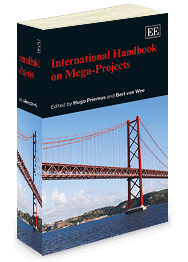
A short summary including a link to a copy of the review follows.
BOOK REVIEW: ‘The Economy of Green Cities’ by Richard Simpson and Monika Zimmermann (Eds.)
Benjamin Zhan reviews this edited volume, by Richard Simpson and Monika Zimmermann (Eds.) for the Journal of Transport Geography.
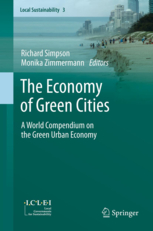
A short summary including a link to a copy of the review follows.
BOOK REVIEW: Transport Governance in Megacities – Public Transport Reforms in Santiago de Chile and Bogotá (German language book)
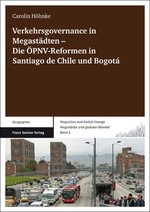
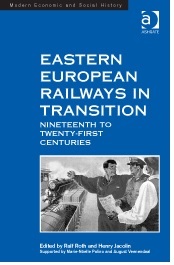
BOOK REVIEW: Eastern European Railways in Transition: Nineteenth to Twenty-First Centuries, by R. Roth and H. Jacolin
RGS-TGRG Writing Transport Geography Workshop
In April 2014 the Institute for Transport Studies at the University of Leeds hosted 21 delegates from the University of Leeds alongside other British and European Universities for a workshop on “Writing Transport Geography”. TGRG Postgraduate reps Ian Philips and Joanna Elvy successfully won a grant from the Royal Geographical Society to host a workshop, which was aimed at encouraging interdisciplinary engagement amongst postgraduate and early career researchers from a variety of disciplines engaged in research with a transport geographical nature.
The one day session included a keynote address from Dr Karen Lucas exploring writing and publication from both the academic journal and policy perspectives (Lucas1_slides / Lucas2_slides). Cristina Irving Turner from Emerald also gave delegates a publisher’s perspective on writing for transport geography (Cristina-Irving-Turner_slides). Nine postgraduate and early career researchers also presented papers outlining their own research which generated lots of discussion and ideas for further work. Their papers included:
- Anna Davidson (University of Oxford) – Bringing into conversation queer and material feminist theory to understandings of urban cycling practices (Think Piece) – Davidson_paper / Davidson_slides
- Reka Solymosi (University College London) – Mapping Fear of Crime as a Dynamic Event in the Whole Journey Environment – Solymosi_paper / Solymosi_slides
- Dr Giulio Mattioli (Univeristy of Aberdeen) – Car dependent practices: initial findings from a sequence pattern mining study of the 2000 British time use survey – Mattioli_slides
- Daniel Oviedo Hernandez (University College London) – Transport strategies in a context of social and spatial peripheries in Colombia – Oviedo_paper / Oviedo_slides
- Wojciech Kębłowski (Université libre de Bruxelles) – Mobility of alternative urban transport policies – Keblowski_paper / Keblowski_slides
- Anna Plyushteva (University College London) – A Journey of Habits: Making, Sustaining and Transforming Everyday Urban Mobilities – Plyushteva_paper / Plyushteva_slides
- Ersilia Verlinghieri (University of Leeds) – Planning for resourcefulness: a participatory approach to transport planning – Verlinghieri_paper
- Nicole Badstuber (University College London) – Governance structures and policy frameworks of public transport systems (Think Piece)
- Alison Rumbles (University of Plymouth) – A critical evaluation of ITSO Smart Ticketing, policy, practice and outcomes (Think Piece) – Rumbles_paper / Rumbles_slides
The day ended with a review session and social networking event which enabled delegates to further discuss the themes that had arisen during the workshop. The TGRG would like to thank all delegates and speakers for attending and also for individual permissions to reproduce the materials from the workshop.
TGRG members’ survey and group summary
A recent survey of TGRG members provided feedback for the committee and other members involved in convening and presenting at the Royal Geographical Society annual conference and other events. The role of the Journal of Transport Geography was widely and warmly recognised and developments in communications were commended. Please see below for the full report.