
Category Archives: News

2019 Hay award winner

The TGRG are pleased to announce that the 2019 Hay Award for contribution to transport geography has been received by Professor David J Keeling. 

Dr Kate Pangbourne, TGRG Chair, gave the speech below when presenting Professor Keeling with his award:

I am honoured to be able to announce this year’s recipient of the TGRG’s annual Hay Award for contribution to transport geography.

Our nominee this year has had a distinguished academic career despite starting late after following an entirely different career path.

With dozens of publications, including monographs, peer-reviewed articles, encyclopedia entries, editorials, popular articles and book reviews, as well as a considerable amount of documented contribution to student education and service to the discipline in a 40 page CV, we believe we have a worthy recipient, whose work has consistently spanned themes and regions that keep transport geography grounded within the wider family of geography, with an expansive breadth of interest in the world.

The active contribution has included regular engagement with both TGRG and AAG, and editorial board membership and associate editorship of our associated journal, the Journal of Transport Geography.

Long associated with Western Kentucky University, and until very recently University Distinguished Professor of Geography there, I am delighted to invite Professor David J Keeling to receive the Hay Award for 2019.
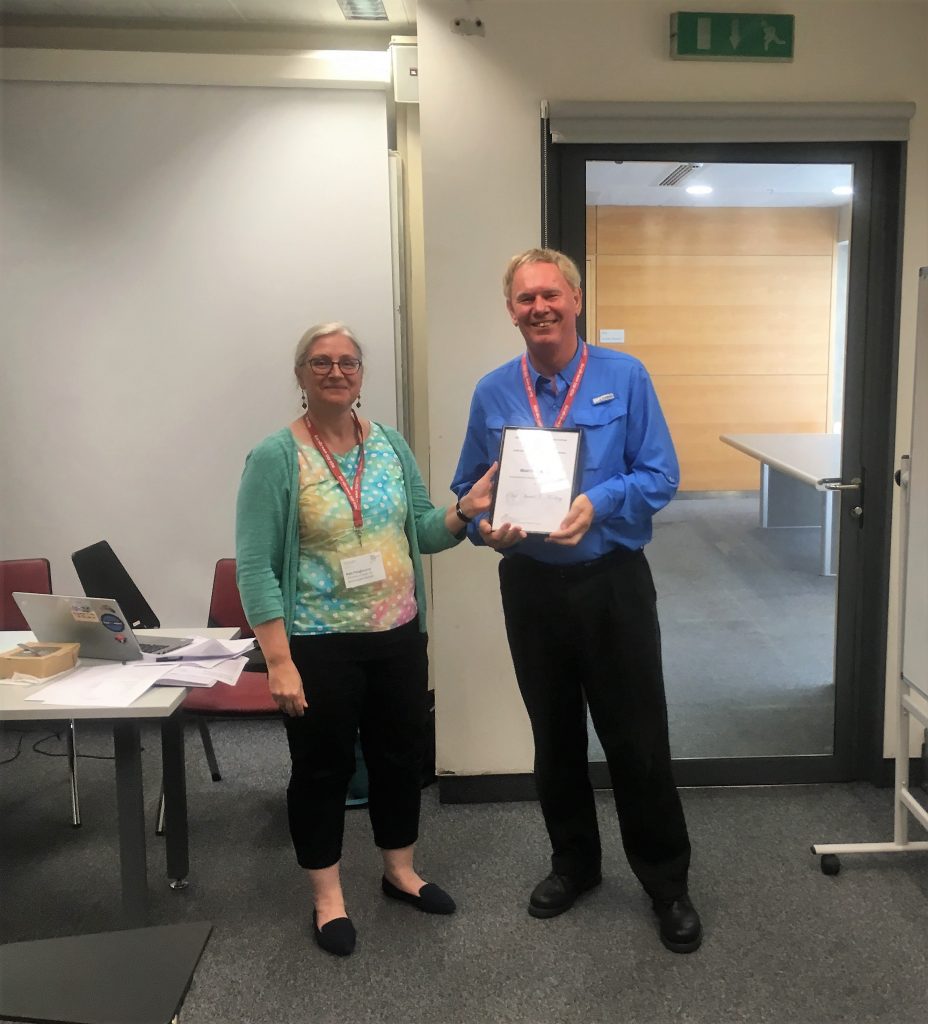
Congratulations to Professor Keeling!

Global Challenges in Transport Leadership programme : ‘Governing Transitions in Urban Transport’ course

25 – 28 June 2019, University of Oxford

We have a few places still available on the Governing Transitions in Urban Transport course, to be held Tuesday 25th- Friday 28th June 2019, at Kellogg College, University of Oxford

Cities are increasingly the places where technological, behavioural and institutional transitions in transport have the greatest impact. The Governing Transitions in Urban Transport course explores how such transformations can be facilitated and steered through policy and planning.

Our speakers include: Our speakers include: Dr Tim Schwanen (TSU), Prof Glenn Lyons (UWE Bristol), Prof Greg Marsden (ITS Leeds), Dr Jacob Doherty (TSU), Dr Ersilia Verlinghieri (TSU), Mai Jarvis (Oxford City council), Dr James Palmer (University of Bristol), Dr Anna Nikolaeva (Utrecht University and University of Amsterdam).

The course is part of the Global Challenges in Transport Leadership programme. The programme provides decision-makers from a range of sectors with the necessary skills and expertise, supported by the latest research evidence, to address the complex challenges of delivering sustainable transport solutions. The programme is delivered by the Transport Studies Unit, at the University of Oxford.

For more info visit: www.tsu.ox.ac.uk/course or contact exed@tsu.ox.ac.uk Applications are accepted on a first-come-first-served basis. We have a limited number of places reserved to national and international PhD students for each course.

Global Challenges in Transport Programme: Smart Technologies and Changing Behaviours course (12 – 15 March 2019)

We have a few places still available on the Smart Technologies and Changing Behaviours course, to be held Tuesday 12th- Friday 15th March 2019, at Kellogg College, University of Oxford.

The course is part of our Global Challenges in Transport Programme, that provides researchers and practitioners with the necessary knowledge, skills and expertise to address the complexity associated with making transport sustainable. The programme is delivered by the Transport Studies Unit, at the University of Oxford.

The Smart Technologies and Changing Behaviours offers the latest thinking on how the current changes in technology and user behaviour can be understood, and what their interactions mean for the future of transport demand. It explores emerging contemporary mobility cultures in different global regions, the diffusion of smart technologies and new perspectives on their role, changing behaviours and energy reduction, and the sociocultural dynamics of behaviour change.

Our speakers include: Dr Tim Schwanen (TSU), Dr Debbie Hopkins (TSU), Prof John Miles (University of Cambridge), Prof Graham Parkhurst (UWE), Carolin Reiner (Behavioural Insights Team), Prof Benjamin Sovacool (University of Sussex), Prof Lorraine Whitmarsh (Cardiff University). The full programme and further details about all courses in the Global Challenges in Transport programme can be found at www.tsu.ox.ac.uk/course.

To enquire or apply, please email exed@tsu.ox.ac.uk

Dr Ersilia Verlinghieri

RGS-IBG 2019 session – paper call: Recent Developments in Transport Geography

We are pleased to invite the submission of abstracts for the following session at the 2019 RGS-IBG International Conference: Recent Developments in Transport Geography

This session is specifically focused at post-PhD Early Career Researchers conducting cutting-edge research in transport geography or related fields.  It is intended to provide a relaxed and stimulating forum for ECRs to discuss and exchange ideas, and to foster potential future research collaborations.  For the purposes of this session an Early Career Researcher is defined as someone who will have had their PhD viva within the last 8 years on 1 September 2019, and who is not in an established/permanent academic post.  We will consider papers on any topic relating to transport geography, but would particularly welcome submissions which bring a transport perspective to the overall conference theme of ‘Geographies of trouble / Geographies of hope’. 

The session is sponsored by the Transport Geography Research Group, a group of academic and professional Transport Geographers with global membership. We have a very wide range of interests within our membership, and we hope the session will reflect this by including both quantitative and qualitative approaches to the geography of transport from a range of spatial contexts.

The conference will take place at RGS-IBG in London from Tuesday 27 to Friday 30 August 2019.  More information about the conference can be found at https://www.rgs.org/research/annual-international-conference/

Abstracts of up to 250 words should be sent by email to the session convenors Prof Graham Parkhurst (Graham.Parkhurst@uwe.ac.uk) and Dr Simon Blainey (S.P.Blainey@soton.ac.uk) by 1700 GMT on Friday 8 February 2019.

RGS-IBG 2019 session – paper call: Long-distance travel and transport justice

Convenors: Frédéric DOBRUSZKES (Brussels Free University), Chia-Lin CHEN (University of Liverpool in London), Amparo MOYANO (University of Castilla-La Mancha) and Francesca PAGLIARA, University of Naples Federico II)

There is a clear trend that in the era of widespread information and communication technological (ICT) development and large-scale transport investment, places distant apart are increasingly inter-related and connected. Therefore, people have involved more and more long-distance travel which is defined here beyond intra-metropolitan areas for at least a few hundred kilometres[1]. Although the rise of a networked society and long-distance travel could enhance economic growth and competitiveness, social challenges have been largely neglected. Academic knowledge and policy of transport and mobility has mostly been investigated through the lens of so-called neo-classical and sustainable mobility paradigms.

While these approaches diverge in many ways, they commonly depoliticise debates and ignore the role of social divides in mobility patterns and the fact that transport policies are not neutral in social terms[2]. The emerging theme of transport justice[3] is promising in addressing the lack of critical approaches to transport and mobility studies, but has been mostly focused on urban transport (ibid.). Therefore, this session is expected to expand the concept of transport justice toward long-distance travel and explore associated issues and policy implications via various transport modes and services, including (but not restricted to) aviation, high-speed rail and coach services.

Topics could include:

  • How can long-distance travel and transport justice be conceptualised?
  • Do long-distance travellers belong to specific social groups?
  • How much transport justice explain modal split on long-distance mobilities?
  • What are the factors of social exclusion in long-distance travel markets?
  • How much yield management and dynamic pricing shape the spatial patterns of long-distance mobilities?
  • Have low-cost airlines really helped to democratise aviation?
  • Have low-cost high-speed rail (such as Ouigo and Izy) made high-speed rail more open to all social groups?
  • What policies to improve long-distance transport justice?

Submission (by the 31st of January 2019):

Please send your abstract to frederic.dobruszkes@ulb.ac.be including:

  • Title
  • Name(s)
  • Affiliation(s)
  • Email address(es)
  • Presenter’s name
  • Abstract (up to 150 words)

The whole special session will then be submitted by the conveners to the RGS Conference team.


[1] There is no universal definition of long-distance. In case of UK, above 100 miles are regarded as long distance

[2] Kębłowski, W. and Bassens D. (2018). “All transport problems are essentially mathematical”: The uneven resonance of academic transport and mobility knowledge in Brussels, Urban Geography 39(3): 413-437.

[3] Martens K. (2017). Transport justice: designing fair transportation systems. New York: Routledge

RGS-IBG 2019 session – paper call: Air Transport in the Global South

Convenors: Eric Njoya (University of Huddersfield) and Richard Knowles (University of Salford, Manchester & University of Huddersfield)

The slow development of air transport routes in the Global South (Africa, Latin America & parts of Asia) has impacted negatively on economic development. Routes within and between Global South countries are more limited than connections with Global North hubs and gateway cities. The objectives of the session are to identify why the air transport environment is weak in the Global South and external routes are dominated by airlines owned and based in the Global North.

Topics could include:

  • Aviation cooperation: South-South and North-South
  • Air Transport and Tourism Development
  • Aviation and Trade
  • Commercialisation of air transport infrastructure
  • The role of Low Cost Carriers (LCCs)
  • Distribution and marketing models
  • The importance of domestic aviation given the common lack of surface options in the global South
  • New tourist mobility patterns following the development of new middle classes

Submission (by the 31st of January 2019):

Please send your abstract to both E.Njoya@hud.ac.uk and R.D.Knowles@salford.ac.uk, including:

  • Title
  • Name(s)
  • Affiliation(s)
  • Email address(es)
  • Presenter’s name
  • Abstract (up to 150 words)

The whole special session will then be submitted by the conveners to the RGS Conference team.

RGS-IBG 2019 session – paper call: Geographies of Disruptive Technologies: transport governance challenges

Call for paper abstracts for a proposed session at the Royal Geographical Society Annual Conference 2019. The conference will take place at the Society in London and at Imperial College London from Tuesday 27 to Friday 30 August 2019.

Convenors: Dr Kate Pangbourne and Professor Greg Marsden (both Institute for Transport Studies, University of Leeds)

It is argued that a range of potentially disruptive new technologies will fundamentally change the way people and goods move. The range of these innovations and technologies is large and each has different qualities and potential implications for different places, from rural to urban and core to periphery. Some of them are frequently described as ‘disruptive’. For example, self-driving vehicles (SDVs), Mobility as a Service (MaaS), smartcard and contactless ticketing technologies, delivery drones, shared services (city bike schemes, free-floating scooters, ride-hailing, lift sharing, car sharing), electric cars and associated charging infrastructure, hydrogen buses and refuelling infrastructure, are all jostling for space in the imagination of politicians, urban and transport planners. However, there is a lot of technological optimism attached to many of these innovations and there remains an absence of data regarding their spatial, social and distributional impacts. It will not be one transition, but many. Whilst some aspects of the transitions will be more amenable to steering than others, there is also the issue of foreseeability of the impacts – it is highly likely that unanticipated effects will only emerge after some time. This session is particularly interested in understanding more about a) how different places are currently approaching the governance of the integration of new technologies, or how they might approach this in the future, given the increasingly distributed networks of actors, and b) how to positively affect social change in the context of transition. Topics could include (but are not limited to):

•  Understanding the spatial and social impacts of mobility innovations

•  New patterns of network governance

•  Governing competition for space

•  The potential for socio-distributional impacts from the risk of public ‘goods’ being privatised (such as urban streets and transport networks)

•  Collaborative decision-making on desirable futures and policy options

You are invited to submit abstracts of between 200-300 words by email to k.j.pangbourne@leeds.ac.uk AND tragrm@leeds.ac.uk by 31st January 2019. We will then select the best submissions for our full session proposal which will be submitted to RGS in mid-February. We expect to have final confirmation of acceptance by end March 2019.

Further information about the conference can be found here: https://www.rgs.org/research/annual-international-conference/programme-(1)/

RGS-IBG session – paper call

Geographies of the Missing and the Lost: New Technologies and Developments Re Amelia Earhart, Band Leader Glenn Miller, Forensic “Sniffer” Dogs, Lost Hikers, and Search Optimization

Session Convenor : Llewellyn Toulmin, PhD, FRGS, (Fellow of the Explorers Club, USA; Co-founder, Missing Aircraft Search Team)

Affiliation: Transportation Geography Research Group (TGRG)

Abstract

Finding lost or missing persons, aircraft and vessels is one of the most challenging and urgent problems in geographical analysis. Such cases involve numerous aspects of geography and other sciences, including GIS, search optimization at sea and across large and varied landscapes, human psychology and behavior, field operations and expedition management, DNA analysis, canine detection procedures, aircraft systems analysis, forensic science, mapping software development, and numerous others.

This session will cover substantive developments in famous cases, and technical developments in a wide range of fields that can improve search and rescue/recovery. Papers in the form of briefings have been secured to cover new technical and substantive developments in the famous case of Amelia Earhart and Fred Noonan, who disappeared in the South Pacific in 1937; new techniques for improving lost person search operations, based on recent behavioral research in Yosemite National Park in California; and the capabilities of one of the newest tools in search operations, namely historic human remains detection dogs, who have succeeded in finding graves and burials up to hundreds of years old, in a wide variety of challenging terrains ranging from deserts to the Alaskan wilderness to coral atolls – and even underwater. However, additional papers are sought which fit within the session theme, especially from British and European authors and teams.

Instructions for Authors

  • Paper title
  • Paper abstract (100-300 words) and/or type of presentation (e.g. PowerPoint briefing, paper, etc.)
  • Name of author(s)
  • Affiliation of author(s)
  • Brief bio of author(s)
  • Email and phone number for each author
  • Need if any for Internet access or any special facilities

Send to:

Llewellyn Toulmin, PhD, FRGS

The Explorers Club; Missing Aircraft Search Team

Email: LewToulmin@aol.com

Deadline:
February 11th, 2019

RGS-IBG 2019 session – paper call: Up in the air: geographies of trouble and hope at 35,000ft

We are pleased to invite abstracts for our TGRG sponsored session at the RGS-IBG Annual Conference 2019 entitled Up in the air: geographies of trouble and hope at 35,000ft.

The conference will take place at the Society in London and at Imperial College London from Tuesday 27 to Friday 30 August 2019. Please email paper title and max 250-word abstract to the session conveners by close of play on Wednesday 6th February. Authors will be notified of the outcome the w/c 11th February.

Session conveners: Professor Stephen Ison and Dr Lucy Budd, School of Architecture, Building and Civil Engineering, Loughborough University, Loughborough, Leicestershire, UK, LE11 3TU. E: s.g.ison@lboro.ac.uk and l.c.s.budd@lboro.ac.uk

In 1944, the Chicago Convention on the future of International Civil Aviation was convened in the hope of promoting a more connected, equitable and harmonious new post-war world order through the medium of commercial flight. 75 years later and although the development of an increasingly safe, cost efficient and reliable air transport network has provided economic and social benefit to some, the global mobility of over 31,000 aircraft, 4.1 billion passengers and 62 million tonnes of air freight a year presents a range of potentially troubling social, political, cultural and environmental challenges that need to be addressed. Indeed, while the inauguration of the latest generation of passenger aircraft, the introduction of ultra-long haul air routes and regulatory reform in key world markets are reconfiguring the spatial patterns and processes of flight and ushering in a new era of hyper-aeromobility for a privileged few, technological and regulatory reform also reveal and reinforce the uneven global distribution of wealth, political power, economic activity, social opportunity and environmental pollution.

This session will bring together papers which explore the myriad geographies of commercial air transport as they pertain to people (whether passengers, employees or the population at large), places (at all sites and scales) and policies (concerning economic regulation, geopolitical relations, migration and environmental protection). Papers may be qualitative or quantitative in nature and draw on case study examples from around the world. We are particularly keen to attract papers from people and places that have historically been underrepresented in debates surrounding air transport geography and, in so doing, we echo the conference theme of geographies of trouble/geographies of hope. Discussions are currently taking place with a view to publishing the full papers in a special issue of a SSCI listed journal following the conference.

RGS-IBG 2019 session – paper call: Current and Emerging Research in Transport

Call for submissions on “Current and Emerging Research in Transport” RGS-IBG Annual International Conference, 27-30 August 2019, London, UK. Session sponsored by Transport Geography Research Group.

Session convenors: Suzanne Maas (University of Malta) – suzanne.maas@um.edu.mt Freke Caset (Ghent University and Vrije Universiteit Brussel) – freke.caset@ugent.be Samuel Nello-Deakin (University of Amsterdam) – s.nello@uva.nl

We are inviting abstract submissions from postgraduate students to a TGRG sponsored session at the 2019 RGS IBG Annual International Conference titled “Current and Emerging Research in Transport”.

This session is aimed at postgraduate students conducting research in any aspect of transport geography. It’s an open-themed session, but we particularly welcome papers which address the wider conference theme (Geographies of trouble /geographies of hope) from a transport perspective. Our event hosts a wide range of presentations and is always well attended. Current and emerging research in transport provides a relaxed, supportive atmosphere for postgraduates at any stage of their research to present work in progress, to share ideas and to discuss synergies. Additionally, the TGRG rewards a postgraduate prize for the best postgraduate presentation in any TGRG session at the RGS-IBG 2019 Conference.

If you would like to present a paper in this session, please submit the following information to the session convenors by Friday 8th February (17:00) 2019.

• Title

• Authors, affiliations and email addresses

• Presenter

• Abstract (up to 300 words)