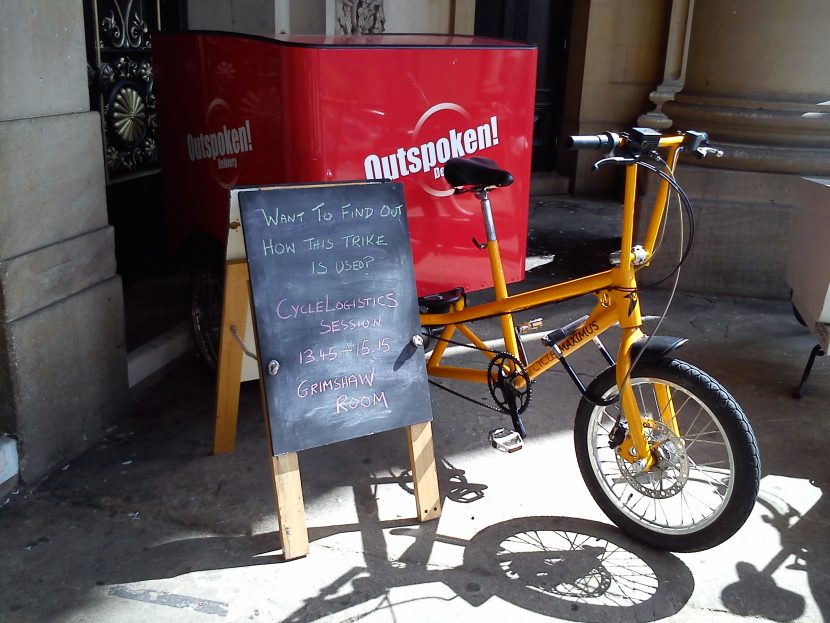
Category Archives: Events

Innovation and Opportunities for Rail Freight in the 21st Century conference in Paris April 8th 2015.

We had a great event on Innovation and Opportunities for Rail Freight in the 21st Century with some excellent presentations and excellent question and answer sessions afterwards.

If you attended and would like to see a presentation again, or wish to see a presentation from a parallel stream that you missed, or if you were not able to join us, the videos are now available on the SPECTRUM website.

http://www.spectrumrail.info/final-conference

Enjoy and please share with others.

Smart Urban Freight Conference 2015

3rd June 2015  – Berlin, Germany

The Smart Urban Freight Conference 2015 will take place in Berlin, Germany, on 3rd June 2015. The Conference will disseminate the results of the Smartfusion project – including the Smart Urban Freight Designer tool – to an expert audience of city and regional authorities, logistics operators, fleet managers, industry representatives and academics

A poster session will explore and present state-of-the-art solutions to urban freight problems in European cities.

Interactive sessions and micro-lectures will stimulate knowledge transfer among peers across Europe and, building on the success of last year’s event, Smartfusion will launch a Call for City-based posters, to gather new insights into policy, technology, social and economic interventions.

This event is free to attend and open to all.

A draft agenda can now be downloaded here

Innovation and Opportunities for Rail Freight in the 21st Century

April 8th 2015 Paris

Registration is now open for the the “Innovation and Opportunities for Rail Freight in the 21st Century” event taking place on April 8th at UIC’s Headquarters in Paris.

The event is open to anyone wishing to attend (subject to availability) and will include experts from Europe’s rail freight and logistics industries.

The event will be used to showcase the outputs of the SPECTRUM (Solutions and Processes to Enhance the Competitiveness of Transport by Rail in Unexploited Markets) project in the context of European and global rail freight and logistics industries and research arena.

Please register your attendance at: http://forms.ncl.ac.uk/view.php?id=7679

An agenda can be download here

URBE: URban freight and BEhavior change

Conference organized by Department of Political Sciences and Centre for Research on the Economics of Institutions, University of Roma TreOctober 1st – 2nd 2015, Rome, Italy

Website: http://host.uniroma3.it/eventi/urbe

We are pleased to announce the Call for Papers for the URBE – URban freight and BEhavior change Conference to be held in Rome, Italy, October 1st-2nd, 2015. Researchers, practitioners, politicians and public authorities are invited to use the conference as a platform for knowledge-exchange and transfer.
The conference is endorsed by: 1) Center of Excellence for Sustainable Urban Freight Systems, 2) WCTRS’ Freight Modelling (SIGB5), 3) Italian Society of Transport Economics and Logistics.

Aims and scope
URBE aims at identifying the behavioral game changers capable of modifying the present trends and pro-actively responding to the sustainability challenges urban freight distribution possess to modern cities given the role it plays in linking production, logistics and society.
The conference, taking a trans-disciplinary approach, focuses on the various alternatives capable of stimulating stakeholders’ behavioral change and engagement for a sustainable urban freight distribution. In more detail, the main topics relate to the behavioral pros and cons of: stakeholder involvement methodologies, advanced modeling techniques, innovative organizational structures, policy appraisal and evaluation techniques.

How can we use technology to create sustainable city transport? – Guardian Chat

Join the Guardian live chat on Thursday 30 October at 1pm GMT to discuss how technology can create cleaner, smoother, more efficient city transport

Demographers predict that by 2050 there are going to be 2.5 billion more people living in urban areas. Meanwhile, transport flows within cities are becoming ever more challenging to predict and manage.
Continue reading How can we use technology to create sustainable city transport? – Guardian Chat →

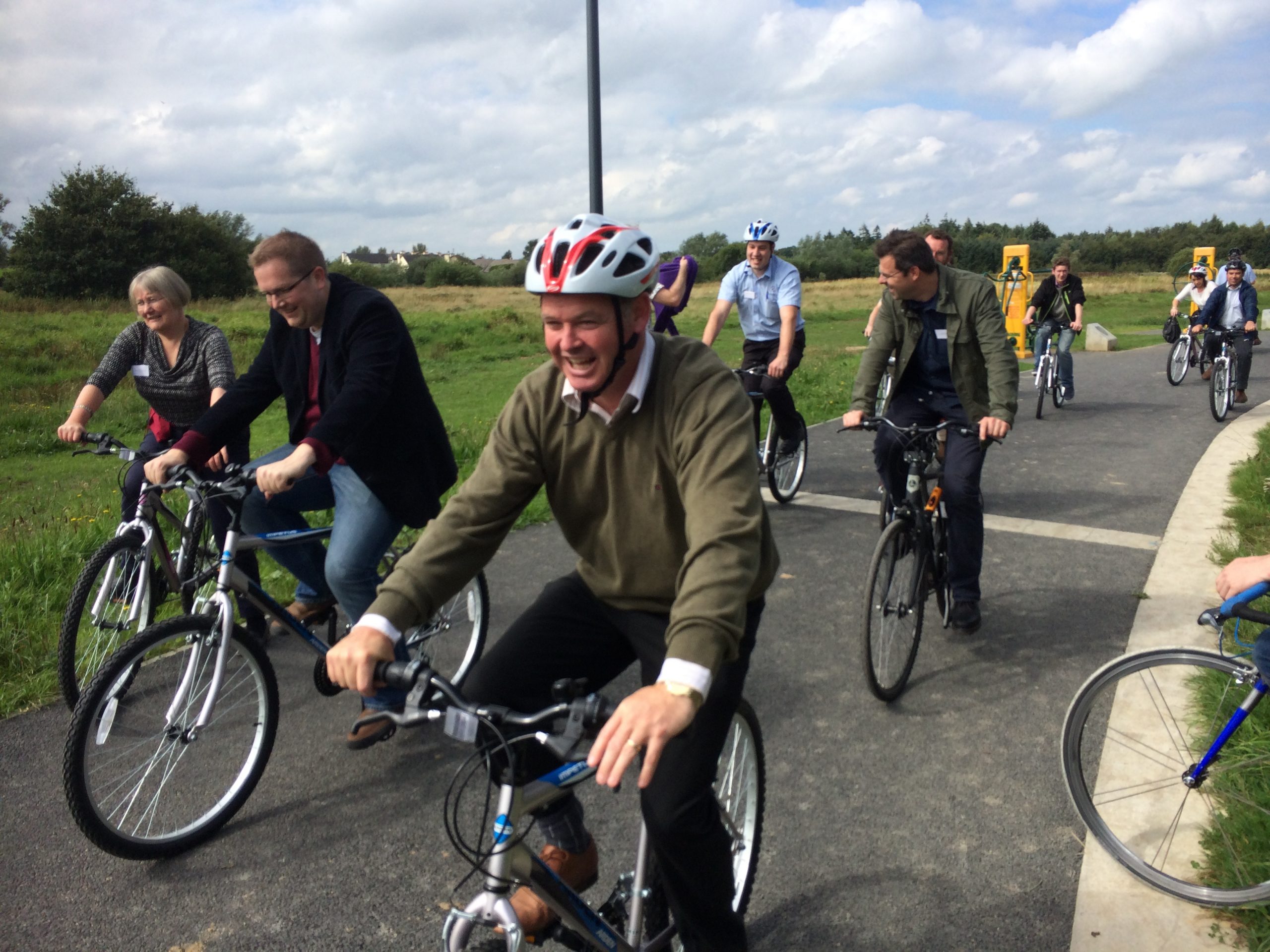
Irish Transport Research Network Cycling Workshop, Limerick

The Irish Transport Research Network preceded their 2014 annual conference, at the University of Limerick, with a cycling-focused workshop celebrating Limerick’s position as a demonstration city for smarter travel.

The workshop took place on the 3rd September and effectively brought together practitioners, policy makers and researchers from across Ireland for both the workshop and the conference.

Continue reading Irish Transport Research Network Cycling Workshop, Limerick →

‘The Geography of Business Travel’ session at RGS 2013

The last TGRG session of the conference, ‘The Geography of Business Travel’, comprised a range of papers, from theoretical studies drawing on a range of disciplines, to empirical research based on primary and secondary data, then further to a presentation of a practical tool available to support decision making.

It commenced by exploring the how the practice of business travel has become ingrained in society despite compelling reasons to find alternatives to travel.  James Faulconbridge outlined how market development, the marketing of travel alternatives and the image associated with business travel are challenges to countering this trend.  The company car, a key contributor to business and in some cases leisure travel, was the focus of the next presentation.  Using a London-centric approach, Scott Le Vine answered questions such as ‘How, when and where are company cars used?’ and considered what access to a company car means for household as well as individual travel.  In considering the procurement practices relating to business travel, Paul Adderley presented a tool designed to consider the door-to-door travel and mobility options with consideration for environmental costs.  The tool identifies the range of options providing information about the impact of each; it includes the option not to travel (using a technological alternative) and also recognises that private vehicles may provide part of the solution.  Lisa Davison then examined the characteristics of business travellers who fly as part of their work, highlighting the difficulties in responding to a homogeneous business air travel segment, where in reality a range of sub-segments exist.  The interrelatedness of business and personal travel formed the focus of Kate Pangbourne’s presentation, which emphasised the need to better understand how individual and organisational factors come together, so as to better inform business practices and inform transport policy.

As the conference drew to a close, presenters dashed for their trains or engaged in activities typified by the ‘leisure’ tourism segment thus demonstrating some of the complexities of the geography of business travel.

Continue reading to view a selection of the presentations from the session. Continue reading ‘The Geography of Business Travel’ session at RGS 2013 →

‘Walking & Cycling: The contributions of health and transport geography’ session at RGS 2013

This session was co-sponsored  by the TGRG and the Geography of Health Research Group (GHRG).  It brought together what appeared to be an eclectic mix of presentations exploring the contribution of geographers’ research in active modes.

Firstly Anna Davidson’s‘A political ecology of the body in urban cycling’, looked at the potential for new theoretical approaches to understanding the interaction between the cyclist and their environ, then Esther Rind and colleagues used a modelling approach to explore whether a measure of environmental quality impacts upon active travel behaviours.  David Lindelöw presented a compelling argument for more research into walking as a mode of transport, then drew on principal component analysis to examine factors influencing walking. His work drew parallels with Maslow’s hierarchy of need after the work of Alfonzo (2005).  Rachel Lee and Rebecca Johnson each presented case studies evaluating interventions to encourage active travel, using a Pecha Kucha style; a copy of Rachel’s can be view below.  Rachel focussed upon how Living Streets’ community partnership approach to delivering environmental improvement encouraged walking, whilst Rebecca evaluated the role of adult cycle training in promoting confidence in Tower Hamlets.  Each emphasised the ability of simple and relatively cheap interventions to facilitate behavioural change.

The session proved that despite the breath in approach, in reality there was a strong link between each paper with themes such as community, health, the built environment, policy (and in some case politics) and practice being emphasised throughout.


 [slideshare id=26226849&style=border:1px solid #CCC;border-width:1px 1px 0;margin-bottom:5px&sc=no] 

Rachel Lee’s pecha kucha presentation. 

Continue reading to see the accompanying text. Continue reading ‘Walking & Cycling: The contributions of health and transport geography’ session at RGS 2013 →