BOOK REVIEW: Geographies of Transport and Ageing

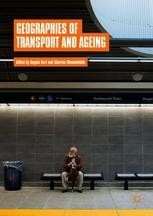
Jean Ryan reviewed ‘Geographies of Transport and Ageing’, edited by Angela Curl and Charles Musselwhite.

“The editors and authors succeed in taking broad subject matter and converting it into a succinct, accessible and easily digestible book. This book is a valuable contribution and is recommended for anyone working with these topics.”

You can read the full review here.

This review is published with the kind permission of Elsevier. It is  also available via Science Direct, published in The Journal of Transport Geography, Volume 74, 2019. Geographies of Transport and Ageing, by Angela Curl and Charles Musselwhite (Eds.). Cham: Palgrave Macmillan. £96.50 (hardback); £91.68 (e-book). ISBN 9783319763590

FINAL DEADLINE EXTENSION – RGS 2021 ABSTRACT CALL: COWORKING SPACES: A TOOL TO REDUCE COMMUTING AND ENHANCE WELL-BEING DURING THE COVID-19 PANDEMIC

We are now seeking additional abstracts for the forthcoming TGRG-sponsored session at the RGS-IBG AC 2021

**The FINAL deadline is Wednesday 10th March.**

Proposed Session Title:

Coworking spaces: a tool to reduce commuting and enhance well-being during the COVID-19 pandemic

Session convenors:

Dr Thérèse Bajada (University of Malta), Dr Bernadine Satariano (University of Malta, Junior College) and Prof. Ilaria Mariotti (DAStU-Politecnico di Milano)

Session Delivery: Virtual

Proposed session abstract:

Over the last decade, there has been a proliferation of new working spaces and specifically coworking spaces (CSs) in which users (coworkers) work alongside other unaffiliated professionals for a fee and exploit dynamic and inspiring milieu for collaboration and knowledge sharing. The COVID-19 pandemic has altered working lifestyles because of social distancing and other health protocols. Indeed, groups of people, worldwide, are still working from home or searching for a safe and healthy workplace. CSs represent a valuable alternative for remote workers because they offer: 1) access to adequate technology, 2) reduced risks of isolation, 3) reduced costs for employees (i.e. by providing access to a cheaper habitat, or by reducing commuting costs), 4) improved job satisfaction and well-being, 5) enhanced work-life balance, by supplying facilities like baby-sitting, 6) reduced need to commute, and encourage active travel (walking and cycling). CSs, are therefore contributing to a change in urban design that incorporates urban and transport planning because they can be combined with the concept of the 15/20 minute city, whereby people do not need to travel long distances to reach their place of work but commute shorter distances, possibly by means of active travel.

This special session refers to the Cost Action CA18214 “The Geography of new working spaces and the impact on the periphery” (http://www.new-working-spaces.eu/; https://www.cost.eu/actions/CA18214), which has created a network of 140 research partners from 33 Countries. The session welcomes abstracts on any theoretically and empirically informed aspects of CSs associated with mobility, work-life balance and wellbeing. The topics invited include but are not restricted to the following:     https://c0.pubmine.com/sf/0.0.3/html/safeframe.htmlREPORT THIS ADPRIVACY SETTINGS

• What is the role of CSs in changing the way we travel?

• How can CSs contribute to improving work-life balance and wellbeing in urban contexts?

• To what extent can CSs be related to policy packages to engage in sustainable community behaviour?

• What are the effects of CSs on the economy (keeping in mind the circular economy)?

• How can CSs contribute to the 15-/20-minute city policy concept?

We are developing a proposal for the Journal Research in Transportation Business and Management (RTBM) for a special issue associated with this session.

Abstracts of 200 words including a title, and the names, affiliations and email addresses of all authors should be submitted electronically to therese.bajada@um.edu.mt, bernadine.satariano@um.edu.mt and ilaria.mariotti@polimi.it.

We look forward to receiving your abstract.

Kind regards

Therese, Bernadine and Ilaria.

RGS TGRG SESSION – CALL FOR ABSTRACTS: TRANSPORT PLANNING AND GOVERNANCE IN TIMES OF CRISIS – CHANGING PRACTICES AND EFFECTS ON SUSTAINABLE TRANSPORT

Convenors: Kerstin Stark and Julia Schuppan, German Aerospace Center (DLR)

The proposed session is sponsored by the Transport Geography Research Group (TGRG). It takes place online.

The effects of the Covid 19 crisis on urban mobility are diverse and ambivalent. In terms of transportation planning and governance, new practices are being developed. For example, pop-up bike lanes and temporary pedestrian zones are being established, and it appears that these measures are here to stay. In addition, new formats and tools are being tested to facilitate the dialogue between civil society and administration, as well as between different administrative bodies. As a result, classic barriers associated with planning and implementing more pedestrian and bicycle infrastructure could be addressed and reduced. The crisis is also driving the virtualization of collaboration in planning. The functioning and accessibility of the administration are affected: work culture and practices within the administration are under scrutiny and the pressure to modernize increases.

Besides changes in administrative processes there are also changes in planning needs. It is becoming apparent that as more people work from home, the time patterns of transport demand and the rhythms of daily life are changing, and there is a shift towards individual transportation (bicycles and cars). From the perspective of transport policy and administration, the question is how to respond to these developments and how to leverage their benefits and deal with the associated risks for a sustainable mobility transition.

This session calls for conceptual or empirical contributions that address one or several of the following topics:

  • changing practices in transport planning and policy implementation;
  • use of (digital) tools for participation in planning and their costs and benefits;
  • crisis-induced potentials for sustainable mobility planning;
  • digitalization of administration and virtualization of collaborations;
  • local governance in times of crisis;
  • urban and pandemic resilience.

Please submit your abstract of 250 – 300 words by February 26th 2021 to Kerstin Stark, kerstin.stark@dlr.de, and Julia Schuppan, julia.schuppan@dlr.de, German Aerospace Center (DLR), Institute of Transport Research.

RGS-IBG CONFERENCE 2021: CALL FOR SUBMISSIONS ON “CURRENT AND EMERGING RESEARCH IN TRANSPORT”

RGS-IBG Annual International Conference, 31st August to 3rd September 2021 in London.
Sessions sponsored by Transport Geography Research Group.

Session convenors

Zhengyue Wan, UCL London, zhengyue.wan.17@ucl.ac.uk

Franziska Kirschner, Goethe University Frankfurt, franziska.kirschner@yahoo.de

Suzanne Maas, University of Malta, suzanne.m.maas@gmail.com

Call for abstracts

We are inviting abstract submissions from postgraduate students to two TGRG sponsored sessions at the 2021 RGS IBG Annual International Conference titled “Current and Emerging Research in Transport”. The conference will have both in-person (situation permitting) and online sessions, so we are planning one session to be in-person and one online, to accommodate different preferences and travel possibilities.

The sessions are aimed at postgraduate students conducting research in any aspect of transport geography. They are open-themed sessions, but we particularly welcome papers which address the wider conference theme ‘borders, borderlands and bordering’ from a transport perspective. Our event hosts a wide range of presentations and is always well attended. Current and emerging research in transport provides a relaxed, supportive atmosphere for postgraduates at any stage of their research to present their work in progress, to share ideas and to discuss synergies.

The TGRG traditionally rewards a postgraduate prize for the best postgraduate presentation in any TGRG session at the RGS-IBG 2021 Conference. All postgraduate presentations in the “Current and Emerging Research in Transport” session will automatically be eligible for the prize; if you do not want to be considered for the prize, however, please state so in your submission. If you want more information on the postgraduate prize, please get in touch with the TGRG postgraduate representatives (see session convenors above).

If you would like to present a paper in this session, please submit the following information to the session convenors by Friday 5 March at midnight.

  • Title
  • Authors, affiliations and email addresses
  • Presenter
  • Abstract (up to 300 words)
  • Preference for virtual or in-person session (situation permitting, if not: virtual)

RGS TGRG DEADLINE EXTENSION: COWORKING SPACES: A TOOL TO REDUCE COMMUTING AND ENHANCE WELL-BEING DURING THE COVID-19 PANDEMIC

**Please note there has been an extension to the deadline to the 24th February.**

We invite abstracts for the forthcoming TGRG-sponsored session at the RGS-IBG AC 2021

Proposed Session Title:

Coworking spaces: a tool to reduce commuting and enhance well-being during the COVID-19 pandemic

Session convenors:

Dr Thérèse Bajada (University of Malta), Dr Bernadine Satariano (University of Malta, Junior College) and Prof. Ilaria Mariotti (DAStU-Politecnico di Milano)

Session Delivery: Virtual

Proposed session abstract:

Over the last decade, there has been a proliferation of new working spaces and specifically coworking spaces (CSs) in which users (coworkers) work alongside other unaffiliated professionals for a fee and exploit dynamic and inspiring milieu for collaboration and knowledge sharing. The COVID-19 pandemic has altered working lifestyles because of social distancing and other health protocols. Indeed, groups of people, worldwide, are still working from home or searching for a safe and healthy workplace. CSs represent a valuable alternative for remote workers because they offer: 1) access to adequate technology, 2) reduced risks of isolation, 3) reduced costs for employees (i.e. by providing access to a cheaper habitat, or by reducing commuting costs), 4) improved job satisfaction and well-being, 5) enhanced work-life balance, by supplying facilities like baby-sitting, 6) reduced need to commute, and encourage active travel (walking and cycling). CSs, are therefore contributing to a change in urban design that incorporates urban and transport planning because they can be combined with the concept of the 15/20 minute city, whereby people do not need to travel long distances to reach their place of work but commute shorter distances, possibly by means of active travel.

This special session refers to the Cost Action CA18214 “The Geography of new working spaces and the impact on the periphery” (http://www.new-working-spaces.eu/; https://www.cost.eu/actions/CA18214), which has created a network of 140 research partners from 33 Countries. The session welcomes abstracts on any theoretically and empirically informed aspects of CSs associated with mobility, work-life balance and wellbeing. The topics invited include but are not restricted to the following:     

  • What is the role of CSs in changing the way we travel?
  • How can CSs contribute to improving work-life balance and wellbeing in urban contexts?
  • To what extent can CSs be related to policy packages to engage in sustainable community behaviour?
  • What are the effects of CSs on the economy (keeping in mind the circular economy)?
  • How can CSs contribute to the 15-/20-minute city policy concept?

We are developing a proposal for the Journal Research in Transportation Business and Management (RTBM) for a special issue associated with this session.

Abstracts of 200 words including a title, and the names, affiliations and email addresses of all authors should be submitted electronically to therese.bajada@um.edu.mt, bernadine.satariano@um.edu.mt and ilaria.mariotti@polimi.it.

Please note there has been an extension to the deadline for submissions. The new deadline for abstract submissions is 24th February 2021.

We look forward to receiving your abstract.

Kind regards

Therese, Bernadine and Ilaria

RGS 2021 TGRG SESSION – CALL FOR PAPERS: THE NEW BOUNDARIES AND BORDERS OF ELECTRIFIED MOTORING

We invite the proposal of abstracts for consideration for inclusion in our forthcoming TGRG-sponsored session at the RGS 2021 conference:

The New Boundaries and Borders of Electrified ‘Motoring’

Session conveners

Billy Clayton (Centre for Transport and Society, UWE, Bristol) william2.clayton@uwe.ac.uk

Graham Parkhurst (Centre for Transport and Society, UWE, Bristol) graham.parkhurst@uwe.ac.uk

Session abstract

The significant negative environmental and health impacts of tailpipe emissions from fossil fuel vehicles is necessitating a rapid shift towards the development and adoption of Electric Vehicles (EVs). EVs are increasingly common in both commercial and private contexts; EVs now represent an established – albeit still proportionally minor – component of new private vehicle sales in many countries globally, but their uptake is accelerating rapidly.

The advance of electrification into long-established motoring practices has the potential to reconfigure the boundaries and borders of private vehicle use, both in terms of physical trip characteristics and driver behaviour/decision making. At least for the short-medium term, EVs have relative limitations in terms of their battery capacities/driving range and associated necessary recharging infrastructure, when compared to typical Internal Combustion Engine (ICE) vehicles, which benefit from longer driving range and much more fully-established refuelling networks. These differences in EV and ICE capabilities mean that drivers who are switching from an ICE to an EV must adapt some of their driving and travel practices accordingly, and in this way, the boundaries and borders of personal vehicle use are themselves also becoming ‘mobile’, potentially showing seasonality and perhaps a temporary ‘retreat’ in an interval between ICE dominance and EVs for which range is no barrier.

We invite papers that examine these new boundaries and borders of electrified motoring. Some suggested questions/themes include:

  • Is the cognitive map of the electric car-user different from the ICE car-user? Does this influence travel choices for different purpose and distances? Have new boundaries been created? Are journeys routed to favour particular types or networks of charger?
  • Do weather and seasons create variable behavioural boundaries according to real-world battery range? Or are such effects simply expressed as heightened range anxiety?
  • Are there new practical or imagined barriers to car use across different hierarchies of space? For example, is the cross-border ‘motoring’ holiday to France no longer an attractive option?
  • What is the role of informal support networks in addressing these challenges? Are these networks falling in importance as EV ownership shifts from the pioneer frontier to the ownership hinterlands?

Submission instructions

The deadline for abstracts to be proposed for consideration for this session is Friday 19th February 2021. Abstracts should be submitted by email to the session conveners, Billy Clayton and Graham Parkhurst, including:

  • Title
  • Name(s)
  • Affiliation(s)
  • Email address(es)
  • Abstract (up to 200 words)

TSU OXFORD: ANNUAL SEMINAR SERIES

From January to March 2021, the Transport Studies Unit (TSU) at the University of Oxford will be running its annual seminar series.  Seminars will take place online via Teams. Booking is required. 

For more information please go to https://www.tsu.ox.ac.uk/events

Professor Jillian Anable – University of Leeds

28th January, 1pm: ‘You can’t always get what you want: a reflection on Climate Assembly UK’s deliberations on decarbonising passenger transport’ 

Dr James Esson – Loughborough University

11 February, 1pm: ‘Livelihoods in motion: age-related mobility, transport and livelihoods in the urban Global South’ 

Dr Anna Nikolaeva – University of Amsterdam 

18 Feb, 1pm: ‘Commoning mobility’ 

Dr Amy Lubitow – Portland State University

25 Feb, 4pm: ‘Transportation and Mobility Justice: Race, Class and Gender Intersections in the United States’ 

Dr David Bissell – University of Melbourne 

11 March, 12pm:  ‘Losing investments in mobility transitions: reckoning with loss in the wake of on-demand’ 

All are welcome and we look forward to seeing you there.

The TSU Team

RGS CONFERENCE 2020-21: TGRG CALL FOR SESSIONS AND PAPERS

Dear TGRG members,

The call for sessions and papers for the 2021 RGS-IBG Annual International Conference is now open and we would like to invite TGRG members to submit session proposals for TGRG sponsorship for this conference.  We encourage all those who submitted proposals for sponsorship for the postponed 2020 conference to rework and resubmit these for 2021, bearing in mind the new guidance for participation. We also welcome new proposals for sponsored sessions.

The conference will take place at RGS-IBG in London, from 31st August to 3rd September 2021 and will be chaired by Professor Uma Kothari (University of Manchester, UK). The conference theme has been brought forward from 2020 and is ‘borders, borderlands and bordering’. We would particularly encourage sessions around this theme, but sessions relating to any aspect of transport geography will be considered.

If you would like to have your session sponsored by TGRG, please submit your session proposal to John Austin (john@mobihub.com) AND Helena Titheridge (h.titheridge@ucl.ac.uk) by 15th January 2021.

Please include the following in your session proposal (you do not have to use the AC2021 session proposal form at this stage):

  • Session Title
  • Names, affiliations and email addresses of the session convenors (we advise TWO)
  • Session Delivery (either in-person or virtual)
  • Session Format  (e.g. papers, panel, discussion, workshop, or something else)
  • Number of required timeslots (1 or 2)
  • A session abstract (about 200-300 words). 
  • Brief description of the size and type of audience you expect your session to attract
  • Up to 5 keywords

We will confirm session sponsorship by 22nd January 2021.  You must inform us by 26th February 2021 of any changes to your session, including withdrawal or a reduction in the number of timeslots you will use.  Requests for additional timeslots (up to a maximum of 2) must also be submitted by 26th February 2021.   We aim to respond to any such requests within 7 days.  You have until 12th March 2021 to issue your Call for Papers, choose your presenters and submit your full session proposal to RGS. 

Guidance:

Sessions in 2021 may be either in-person or online.  Hybrid sessions are not permissible. We will confirm by early April 2021 whether the planned in-person elements can go ahead.  Sessions are scheduled into timeslots of 1 hour 40 minutes long. A session may not occupy more than two of these timeslots in the conference programme.  For session proposals which attract many high-quality submissions, we will consider allowing two timeslots – there are usually 2 or 3 sessions which have two timeslots each. However, we will not necessarily be able to accommodate all such requests.  Session organisers must adhere to the agreed number of sponsored timeslots.  TGRG has a limited number of timeslots, which we will bear in mind when selecting which proposals to sponsor.

Session organisers are reminded of the limits on individual contributions when accepting paper proposals for a session.  Delegates will be limited to one paper presentation and one panel contribution, or two panel contributions.  Session organisers should ensure that they have sufficient confirmed contributors to allow the session to proceed should one or two presenters withdraw.

In addition to promotion of sessions and support in submitting session proposals, one of the benefits of a TGRG sponsored session is that we are given an allocation of guest passes for non-geographers and/or non-UK conference participants. Connected to this, session organisers may suggest names of established speakers for whom TGRG can potentially offer a free conference pass, assuming the criteria for guest passes are met and subject to our allocation of guest passes. We also have a prize for the best paper by a postgraduate researcher presented in any TGRG sponsored session (based on Master’s or PhD work, within a reasonable time after completion).  We also hope to run our usual knowledge exchange event with policy makers and practitioners on the 31st August 2021. Presenters for this event are selected by our hosts and are drawn from TGRG-sponsored sessions only.

The following link may be useful in proposing your session:

https://www.rgs.org/research/annual-international-conference/programme-(1)/

Best wishes,

Helena Titheridge

Chair, RGS Transport Geography Research Group

Professor of Mobility and Sustainable Transport

UCL Centre for Transport Studies

Gower Street

London  WC1E 6BT

Tel. +44 (0)20 7679 7775, h.titheridge@ucl.ac.uk, @HTitheridge

SHARING RESEARCH PROGRESS AND EXPERIENCES IN MOBILITY TRANSITIONS AND PRACTICES

Franziska Kirschner (Goethe University Frankfurt) & Suzanne Maas (University of Malta), Postgraduate Representatives TGRG

As postgraduate representatives of the Transport Geography Research Group  (TGRG), the highlight of our work is the organisation of sessions for postgraduate students in transport and mobility research at the Royal Geographic Society annual conference. In the beginning of 2020 we were in full swing with planning two sessions for the conference that was due to take place in London in the first week of September. Unfortunately, the global COVID-19 pandemic led to the physical conference being postponed to 2021. Since the sessions we organise are aimed at postgraduate students (at PhD and Master’s level) presenting their current research and progress, we felt waiting for the conference next year would be too long as waiting to present for a year is especially long during the PhD process. Therefore, we decided to organise two online sessions on Thursday 3 September to provide an informal space for the confirmed participants to present and discuss their work.

The morning session, chaired by Franziska Kirschner, focused on ‘mobility transitions’. First up was Fizza Fatima, a Master’s student at TU Darmstadt with her presentation ‘Assessing Urban Mobility Challenges in Karachi, Pakistan, Using the CityStrength Diagnostic’. We learned how Karachi is a megacity without a mass transport system and how the road network needs to provide for all mobility; cars, taxis, motorcycles, auto-rickshaws, etc. A BRT network is planned, but even that would rely on the same contested road space, which is also at risk from flooding. We discussed whether non-motorised modes on the neighbourhood level could help to alleviate some of the pressure on the road network and which transport solutions can connect different land uses and serve disparate neighbourhoods in the city. The second presentation by PhD student Andreas Blitz at Goethe University Frankfurt focused on ‘Cycle streets as an effective measure to promote sustainable transport? Findings of an intervention study’. In his research, he applied the ‘Stage model of self-regulated behaviour change for frequent bicycle use’ to an intervention study of the implementation of a cycle street in Offenbach am Main. His results show the majority of the survey respondents accept the concept of the cycle street, but less than half were actually satisfied with the implementation of it. Regardless, the presence of the cycle street had a positive effect on the stage of change of respondents when compared to a control group: less of them could be characterised as belonging to the pre-decision stage (showing no indications for frequent bicycle use) and more to the pre- and post-action stages (showing positive assessments for cycling or having implemented frequent bicycle use). The third presentation continued on the theme of cycling, with a presentation by PhD candidate Suzanne Maas at the University of Malta, on the topic of ‘Shared bicycle use in three Southern European island cities: A comparative analysis of user experiences’, research funded by the CIVITAS DESTINATIONS project. Her results show the strong relationship between the perception of cycling safety and shared bicycle use in Las Palmas de Gran Canaria, Limassol (Cyprus) and Malta. It underlines the importance of separated cycling infrastructure to promote cycling, especially in cities with a low cycling modal share where other road users may not be as accustomed or respectful to cyclists. A quarter of the users in all three cities use their most frequent shared bicycle trip to replace a motorized vehicle trip (previously made by car, taxi, or motorcycle/scooter). In the ensuing discussion, we talked about the perception of cycling as a prerequisite for use, the influence of the pandemic on (pop-up) cycling infrastructure in cities worldwide and the potential for shared bicycles as an individual, but (semi)public transport mode.

The afternoon session, chaired by Suzanne Maas, centred on the theme of ‘mobility practices’. PhD student Sina Selzer of Goethe University Frankfurt presented results from her research on ‘The system of everyday mobility practices of residents of car-reduced housing development’, which is part of the project QuartierMobil funded by the Federal Ministry of Education and Research. We loved the sound of the word ‘carfreeness’ and learned about motivations and practices of residents for not having a car, but also those who do use one. The meanings that her interview subjects gave to their mobility choices are remarkably similar, whether it is a choice for car, bicycle or public transport, and relate to considerations of cost, speed, flexibility and distance. She concludes that motivations for carfreeness “are a combination of the willingness to live car-free and the feasibility”. First-year PhD candidate William Haynes from the University of Sheffield discussed his proposed research on the topic of ‘The railway station as key site of mobility for homeless migrants in Rome’. The (in)visibility and (im)mobility of homeless migrants and their lived experience at the railway station are central to his investigation. How the pandemic might affect his planned research, and how it might have changed or presented new difficulties in these homeless migrants’ lives, are current open questions in his research. Also in the early stages of her PhD, Louise Sträuli from the Tallinn University and Université Libre de Bruxelles, shared her work on ‘Urban Public Transport: tracing the boundaries between public and private space’, research funded by the PUTSPACE project. Her first case study focuses on fare controls and evasion, from which she found that practices of fare evasion arise from different motivations: from necessity, opportunity or dissent. We touched upon some initiatives of fare-free public transport and the pros and cons of such policy proposals. In the discussion, we spoke about different research methods to understand mobility practices, including the possibility of doing ‘travel along’ interviews, to capture the direct experience of interview subjects. We discussed the impacts of gentrification and commercialisation on public space and how interventions, such as automatic turnstiles, cameras and physical measures such as removing benches and adding spikes to urban furniture, are reducing public freedom in transport spaces. And, finally, we discussed the effect of the pandemic on the financing of public transport, on the willingness to used shared mobility modes, as well as on the perception of public space in residential neighbourhoods. The discussions were lively and interesting, thanks to the active contributions of all participating postgraduate students – we really enjoyed the exchange and learned a lot! While appreciating the opportunity to discuss together online, we all hope the conference next year will be able to take place in London as planned, so that we may meet in real life. To strengthen the communication and the discussions among postgraduate students in the field of Transport Geography, we have set up a Linkedin group “Postgraduates in TGRG”, where members can share events and publications and exchange thoughts. We welcome anyone who works or researches topics related to transport and mobility.

TGRG Annual General Meeting: update and agenda/meeting documents

The deadline for nominations to stand for election to the Transport Geography Research Group (TGRG) Committee at the forthcoming AGM has been extended to 17:30 BST on Tuesday September 1st.

We are especially seeking nominations for the post of Awards and Prizes Co-ordinator (3 years). This post is responsible for coordinating the judging and awarding of prizes for essays and dissertations. It  performs a really valuable role in facilitating the encouragement of Transport Geography students’ skills and in fostering a climate of high quality in Transport Geography research. If you’re interested to learn more about what is involved please contact the current postholder, who is stepping down at the AGM, Dr Juliet Jain (Juliet.Jain@uwe.ac.uk)

We also have vacancies for the posts of Treasurer, Membership Secretary, and a Postgraduate Coordinator (the last-named post is for one year, the others are for three). The Treasurer must be a Member or Fellow of RGS-IBG.

In all cases a candidate for election to the TGRG Committee must be a TGRG Member. Nominations (in each case from a Proposer and a Seconder, both members of TGRG) should be made by 17:30 BST on Tuesday, September 1st, by e-mail to the TGRG Secretary (john@mobihub.com) 

And if you are a TGRG member and have not yet done so then don’t forget to register to attend the TGRG AGM which will be held on Wednesday September 2nd 2020 at 14:00 BST, via Zoom. Those members of TGRG who are also Members or Fellows of RGS-IBG will also be able to vote in the associated elections for the TGRG Committee.

To register to attend the AGM (before17:30 BST on Tuesday September 1st, please), use the following link.

https://forms.gle/w5Fjqj7jYG4rSqPa6

If you have any difficulties registering for the AGM, please email the TGRG Secretary, John Austin, at john@mobihub.com

Those who have registered to attend the AGM by the required time will be e-mailed a link for the Zoom meeting, together with supporting material for the AGM.

Below are links to download the agenda and meeting documents. These will be updated, so please check back just before the meeting for the full list: