Below is an audio slide-show of a talk by Ian Philips from the University of Leeds, Institute of Transport Studies. It was not hosted by the TGRG , but jointly, by the GIS Research Group and the Population Geography Research Group.
The reason that it appears here is that it was about transport, or more specifically, to what extent people can travel in the event of an ‘oil shock‘. This is exciting research, as it breaks out of the ‘business as usual’ assumption upon which most transport geography is based. Instead, it pushes our understanding of personal travel to the extreme. Would you be able to get to work if fuel ran out tomorrow? Watch this presentation to find out why this question is so important.
This session was for postgraduate students in any aspect of transport geography. The session provided a relaxed atmosphere for postgraduates at any stage of their research to present their work in progress. It is worth commenting on the work presented by drawing upon the recommendations for future transport geography research made by Prof Andrew Goetz who delivered this year’s Hoyle lecture. The range of contributions in this year’s session showed an interest in interacting with other geographical sub-fields as well as public policy. A variety of approaches are evident in the work presented and there is consideration of social and environmental justice. The slides (submitted by some presenters) give an overview of the work presented but further details can be obtained by contacting the presenters directly – more details on this session are available from the RGS-IBG website.
It is well-known that mobile phones are having a large impact on people’s lives across the world in many, often subtle, ways. No where is this more pronounced than in Africa, where the sudden availability of mobiles is providing people access to communications for the first time.
One under-studied yet crucial impact is on transport. The following video and audio posts, taken with permission at a TGRG session during the RGS-IBG conference last week, illustrate the various impacts and dispose of the simplistic notion that mobiles simply reduce trips. Overall, they make transport more efficient, as explained by Imogen Bellwood-Howard:
Richard Knowles is a veteran of Transport Geography. He has overseen the rise of the Journal of Transport Geography (JTG) from a niche publication focussing mostly on British research to the second most cited transport journal according to the Social Sciences Citation Index (SSCI) of Thomas Reuters. Professor Knowles is also one of the founding members of the Transport Geography Research Group, the wider community of which this website is a part. To commemorate his passing the baton of Editor-in-Chief to recently elected Tim Schwanen, he was interviewed by Elsevier. Continue reading Richard Knowles interviewed→
The Universities’ Transport Study Group (UTSG) conference is an annual event for UK academic transport researchers. January saw its annual conference take place. See below for a write-up by Dr Tim Ryley.
We are preparing for the RGS-IBG annual conference 2013, to be held on August 28th to 30th in London. If you plan to present a paper related to transport geography, please submit abstracts of around 300 words to Kate Pangbourne (k.pangbourne at abdn.ac.uk). Sessions are yet to be finalised, but session themes will include:
GIS and “big data” approaches to understand personal transport flows
Energy and transport
Transport Geography in an interconnected world
Watch this space for more details on this abstract call.
The Transport Geography Research Group and Transport Scotland held a ‘Bridging the Gap’ event on 6th July at Transport Scotland in Edinburgh. This was timed to coincide with the RGS-IBG annual conference, held in the same city.
The event brought together practitioners, policy makers and academics to share good practice, to identify key policy priorities and to inform future transport geography research.
Workshops involved presentation of international examples of transport geography research under themes identified as important to policy-makers and practitioners. This was followed by wider discussion under each theme, namely
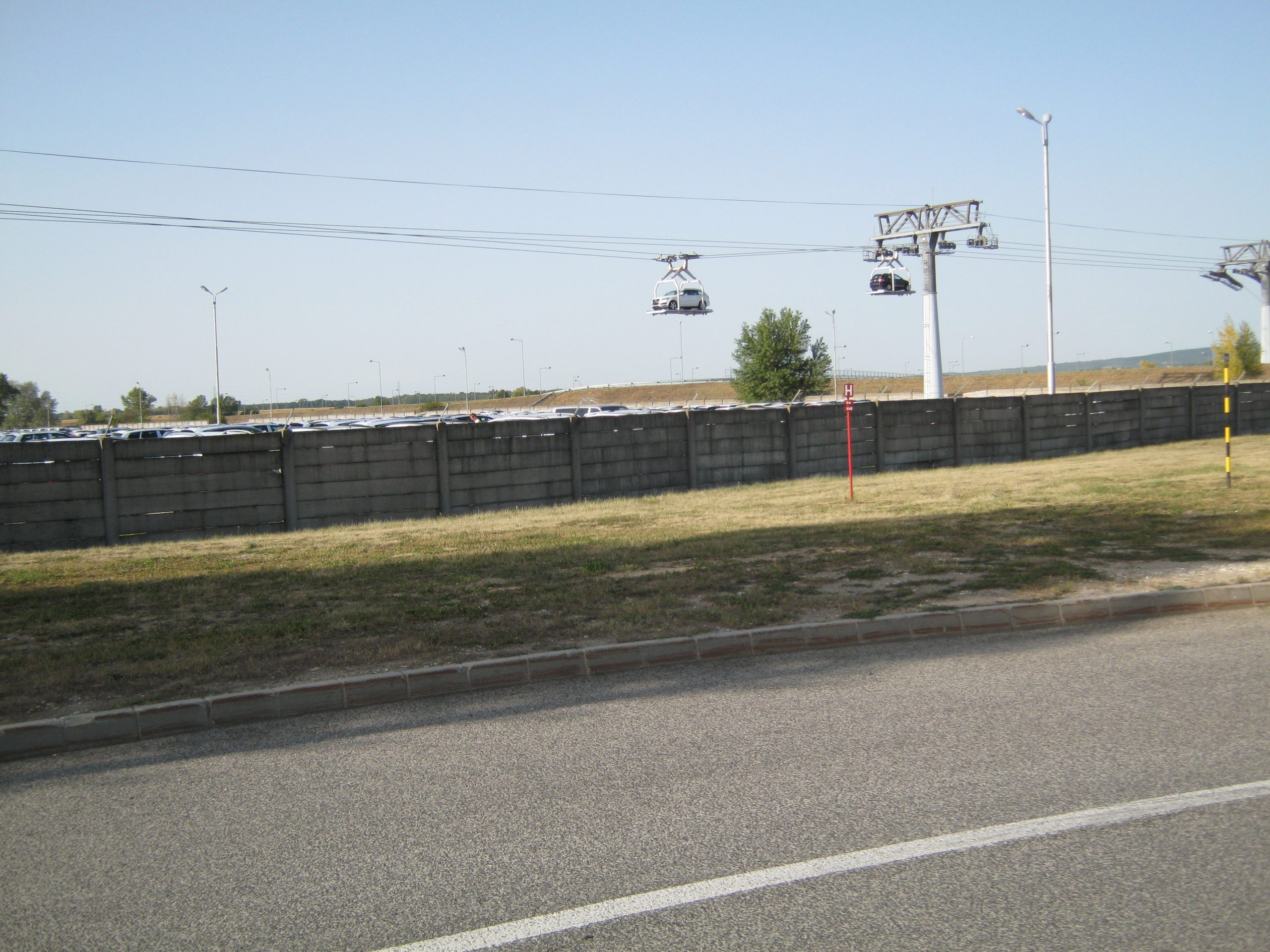
As part of the annual conference of the European Regional Science Association (ERSA), held in Slovakia, a guided tour of a Volkswagen/Audi/Porsche car assembly factory took place. We visited the Bratislava plant, one of the largest and most sophisticated in the world. It produces ~400,000 cars per year and has contributed over 3 million wheeled metal boxes to humanity during its 45 years in operation. This post describes the visit, from the perspective of an environmentally minded transport geographer.
If cars would fly… Automated cable car transporting lift, carrying newly manufactured vehicles to and from the testing facility.

 For more information please contact